
Argyria rufisignella
Zeller, 1872
Mother-of-Pearl Moth
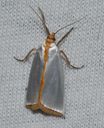
Argyria rufisignella, commonly known as the mother-of-pearl , is a small crambid moth described by Philipp Christoph Zeller in 1872. It is characterized by its distinctive silvery-white forewings with a light brown costal margin and pure white hindwings. The is known from the eastern United States southward to Arizona.
Pronunciation
How to pronounce Argyria rufisignella: /ɑːrˈdʒɪriə ˌruːfɪsɪɡˈnɛlə/
These audio files are automatically generated. While they are not always 100% accurate, they are a good starting point.
Identification
Distinguished from similar crambid by the combination of silvery-white forewings with a contrasting light brown costal margin and unmarked white hindwings. The small size (6–6.72 mm forewing length) and pearlescent appearance are key field marks. Specific separation from in the Argyria requires examination of genitalia or detailed wing pattern analysis.
Images
Appearance
Small with forewings measuring 6–6.72 mm in length. Forewings are silvery white with a light brown costal margin. Hindwings are white without markings. The overall appearance gives a pearlescent or iridescent impression, contributing to its .
Distribution
Eastern United States southward to Arizona. Records span from the Atlantic coast westward through the southern United States.
Similar Taxa
- Other Argyria species share similar size and general crambid ; require detailed wing pattern or genitalia examination for reliable identification
- Other Crambinae with silvery-white wingsSimilar pearlescent appearance; distinguished by specific wing pattern details including the characteristic light brown costal margin of A. rufisignella
More Details
Taxonomic History
Described by Philipp Christoph Zeller in 1872. The specific epithet 'rufisignella' refers to the reddish (rufus) mark or sign on the wing.