
Argyria nummulalis
Hübner, 1818
Satin Argyria Moth
Argyria nummulalis is a small crambid with a wingspan of approximately 19 mm. are active year-round in the southern United States and from May to September farther north. The was described by Jacob Hübner in 1818 and occurs primarily in the eastern and central United States.
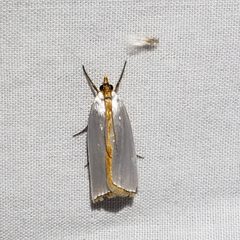
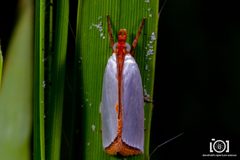
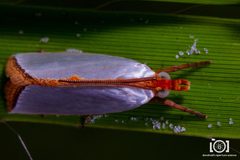
Pronunciation
How to pronounce Argyria nummulalis: //ɑːrˈdʒɪriə nʌmjʊˈleɪlɪs//
These audio files are automatically generated. While they are not always 100% accurate, they are a good starting point.
Identification
The small size (19 mm wingspan) and association with grass may help distinguish this from larger crambid . Specific diagnostic features for separating A. nummulalis from are not documented in available sources.
Images
Appearance
Small with a wingspan of about 19 mm. The specific wing pattern and coloration are not detailed in available sources.
Habitat
Associated with grassland environments, given larval feeding on Gramineae . Specific requirements are not documented.
Distribution
Eastern and central United States: recorded from Alabama, Florida, Georgia, Kansas, Maryland, Massachusetts, Mississippi, North Carolina, Pennsylvania, and South Carolina.
Seasonality
Year-round activity in the southern part of the range; May to September in northern portions of the range.
Diet
Larvae feed on Gramineae (grass ) .
Host Associations
- Gramineae - larval food plantgrass
Ecological Role
Herbivore as larvae, feeding on grasses.
Similar Taxa
- Other Argyria species share similar size and grass-feeding habits; specific distinguishing characters require examination of genitalia or detailed wing pattern analysis not available in general sources.
More Details
Taxonomic Note
Catalogue of Life lists this as an ambiguous synonym of Argyria argentana, suggesting potential taxonomic uncertainty requiring further investigation.