
Argyria gonogramma
Dyar, 1915
Northern Milky Argyria Moth
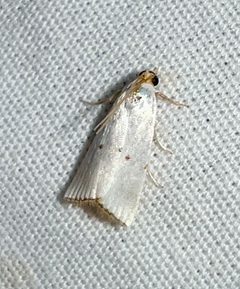
Argyria gonogramma is a of in the Crambidae, described by Harrison Gray Dyar in 1915. It is currently recognized as a synonym of Argyria pusillalis, though it was historically treated as a distinct species under the "Northern Milky Argyria Moth." The species has been documented across North America with over 2,200 observations recorded on iNaturalist.
Pronunciation
How to pronounce Argyria gonogramma: //ɑːrˈdʒɪr.i.ə ˌɡɒn.oʊˈɡræm.ə//
These audio files are automatically generated. While they are not always 100% accurate, they are a good starting point.
Identification
Distinguishing features for this are not well documented in available sources. As a synonym of Argyria pusillalis, it would share the general characteristics of that : small crambid with white or pale creamy forewings and subtle patterning. The specific epithet "gonogramma" refers to a characteristic wing marking pattern, though precise diagnostic features separating it from other Argyria species require examination.
Images
Distribution
North America. Specific range boundaries are not independently documented for this apart from its parent Argyria pusillalis.
Similar Taxa
- Argyria pusillalisArgyria gonogramma is currently treated as a synonym of this ; they were historically separated but are now considered .
- Argyria lacteellaAnother white crambid in the same with similar appearance, though A. lacteella has a more southern distribution in the eastern United States.
Misconceptions
This has been subject to taxonomic confusion. It was originally described as a distinct species by Dyar in 1915, but modern taxonomic sources (Catalogue of Life, GBIF) list it as a synonym of Argyria pusillalis. The "Northern Milky Argyria " suggests a geographic distinction that may no longer be taxonomically valid.
More Details
Taxonomic Status
Current sources list Argyria gonogramma as a synonym of Argyria pusillalis. The iNaturalist platform continues to use this name for observations, reflecting historical usage rather than current taxonomic consensus. The original description by Dyar (1915) distinguished it based on wing pattern characters.