
Prionapteryx
Stephens, 1834
Species Guides
6- Prionapteryx achatina
- Prionapteryx indentella(buffalograss webworm)
- Prionapteryx
- Prionapteryx nebulifera(Clouded Veneer Moth)
- Prionapteryx serpentella(Serpentine Grass-Veneer)
- Prionapteryx yavapai
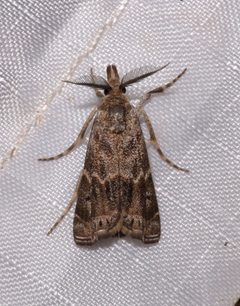
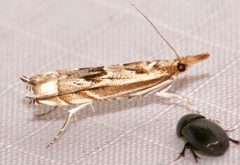
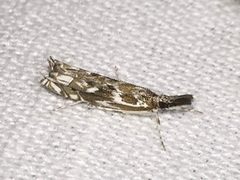
Prionapteryx is a of in the Crambidae, Crambinae. The genus was established by Stephens in 1834 and contains approximately 50 described distributed across multiple continents. Species within this genus are generally small to medium-sized crambid moths. Many species were described by Hampson in the early 20th century based on specimens from Africa and Asia.
Pronunciation
How to pronounce Prionapteryx: //ˌpraɪoʊˈnæptərɪks//
These audio files are automatically generated. While they are not always 100% accurate, they are a good starting point.
Images
Distribution
of Prionapteryx have been recorded from Africa, Asia, Europe, North America, and the Neotropical region. The shows a broad geographic distribution with particular diversity in tropical and subtropical regions.
More Details
Taxonomic History
The has undergone significant revision, with numerous transferred to other genera or synonymized. Former species listed in historical literature include now placed in other crambine genera.
Species Diversity
The contains with a wide range of wing patterns, from plain gray or brown to distinctly marked forms with stripes, spots, or bands. Many species names reflect coloration (albi-, rubri-, flavipars) or geographic origin (moghrebana, somala, banaadirensis).