
Exelastis
Species Guides
4- Exelastis dowi(Dow's Plume Moth)
- Exelastis montischristi(Monte Christi Plume Moth)
- Exelastis pumilio(Dwarf Plume Moth)
- Exelastis rhynchosiae(Snout-bean Plume Moth)
Exelastis is a of plume moths ( Pterophoridae) containing 19 described . The genus includes significant agricultural pests, most notably Exelastis atomosa (tur ), which causes substantial damage to pigeon pea and other legume crops in South and Southeast Asia. Larvae are seed-feeders that bore into developing pods.
Pronunciation
How to pronounce Exelastis: /ɛksˈɛlɑstɪs/
These audio files are automatically generated. While they are not always 100% accurate, they are a good starting point.
Identification
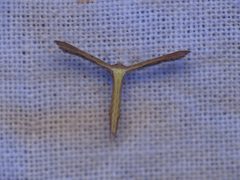
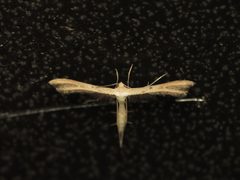
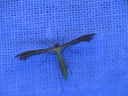
As plume moths, members of Exelastis possess the characteristic divided or fringed wings typical of Pterophoridae. have wings split into feather-like plumes, often held at right angles to the body when at rest. -level identification requires examination of genitalia and wing venation patterns.
Images
Habitat
Agricultural and natural environments associated with plants; specifically recorded from cultivated legume fields, particularly pigeon pea (Cajanus cajan) crops in India. Laboratory studies conducted at 28±2°C and 72±2% relative humidity suggest warm, moderately humid conditions support development.
Distribution
New Guinea; Bangladesh (East Pakistan); India (Madhya Pradesh, Uttar Pradesh, Rajasthan, Bihar, Tamil Nadu/Madras, Karnataka/Mysore, Maharashtra/erstwhile Bombay State); global distribution of extends to other regions based on 1,683 iNaturalist observations.
Seasonality
Active during Kharif season (monsoon/post-monsoon cropping period, approximately October-November in central India). longevity 5-7 days under laboratory conditions.
Diet
Larvae feed on developing seeds within pods of legumes; do not feed on plant material (implied by lepidopteran adult , though not explicitly documented for this ).
Host Associations
- Cajanus cajan - primary pigeon pea/tur; main economic causing up to 30% grain damage in severe
- Dolichos biflorus - horse gram
- Dolichos lablab - lablab bean/hyacinth bean
- Eugenia jambolina - Java plum/jambolan; fruits consumed
- Olea europaea - olive; feeding reported but significance unclear
Life Cycle
Complete . : 2-3 days incubation, laid singly on pods (5-50 eggs per clutch). Larva: five instars, 15-18 days total, feeds within pods on developing seeds. Pupa: 6-9 days. Total : 31-36 days at 28±2°C. : 5-7 days longevity.
Behavior
Females oviposit primarily on pods, occasionally on flower buds and leaves. Larvae bore into tender developing pods to access seeds, creating entry holes. Feeding is voracious and concentrated on developing seeds, causing direct yield loss.
Ecological Role
Agricultural pest of economic significance; seed on cultivated legumes. role in natural unknown.
Human Relevance
Significant agricultural pest in South Asia, particularly damaging to pigeon pea production. Recorded causing 30% grain damage in severe (Gwalior, 1966). Subject of biological and morphometric studies for pest management purposes.
Similar Taxa
- Other Pterophoridae generaSimilar plume-wing ; distinguished by genitalia structure, wing venation, and associations. Exelastis associated with legume crops may be distinguished from related by specific host plant relationships and geographic distribution.
More Details
Species diversity
contains 19 described per Catalogue of the Pterophoroidea of the World (version 1.1.23.125). Formerly included Exelastis bergeri (Bigot, 1969), now excluded.
Research limitations
Most detailed biological data derived from single (E. atomosa) studied under laboratory conditions on single pigeon pea variety. Field , natural enemy relationships, and of other Exelastis species remain poorly documented.
Nomenclatural note
epithet sometimes cited as 'atomosa Wism.' or 'atomosa (Wals.)' — authority appears to be Walsingham, with 'Wism.' likely an abbreviation error in early literature.