
Euchloe olympia
(Edwards, 1871)
Olympia Marble
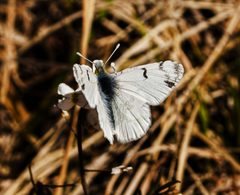
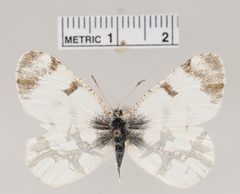
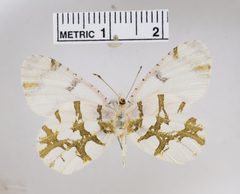
Euchloe olympia, the Olympia Marble, is a pierid native to central North America. It is distinguished from by its distinctive phenotype and , particularly in relation to E. guaymasensis. The has been classified globally as G5/G4, indicating relative stability, though it threats from gypsy moth chemical control programs. A study in central Illinois documented consistent nectar source preferences: Lepidium virginicum for larvae and Nuttallanthus canadensis for .
Pronunciation
How to pronounce Euchloe olympia: /juːˈkloʊ.i ɔˈlɪm.pi.ə/
These audio files are automatically generated. While they are not always 100% accurate, they are a good starting point.
Identification
Euchloe olympia is distinguished from the related E. guaymasensis by distinctive phenotypic and genotypic characteristics. As a member of the 'marble' group within Pieridae, it likely exhibits the reticulated marbled pattern on the hindwing underside characteristic of the , though specific diagnostic features for field identification are not detailed in available sources.
Images
Habitat
Documented from sand prairie in central Illinois. Likely associated with open, dry grassland and prairie given its nectar plant associations and distribution pattern.
Distribution
Southern Canada (Alberta, Manitoba, Saskatchewan), the Midwestern United States, and southward into the southwestern United States.
Diet
Larval stage: observed to use Lepidium virginicum (Virginia pepperweed) as main nectar source. stage: observed to use Nuttallanthus canadensis (blue toadflax) as main nectar source. Shows consistency in flower visitation patterns.
Behavior
Exhibits consistency in nectar source selection, returning to the same flower for feeding. This flower fidelity was documented in a sand prairie in central Illinois.
Ecological Role
; documented nectar feeding relationships with specific native plant suggest potential role in pollination of Lepidium virginicum and Nuttallanthus canadensis.
Human Relevance
Used as a specimen in entomology education, including Science Olympiad competitions. Subject of conservation concern due to vulnerability to gypsy moth chemical control programs. Globally classified as G5/G4 (relatively stable).
Similar Taxa
- Euchloe guaymasensisClosely related distinguished by phenotype and ; E. olympia has a distinctive phenotype and genotype relative to this .
More Details
Conservation Status
Classified globally as G5/G4 (relatively stable), though not under federal watch in the United States. Primary documented threat is chemical control programs targeting .
Research Note
Detailed ecological studies appear limited; most biological information comes from a single study in central Illinois sand prairie. The Annals of the Carnegie Museum publication (Part 8 of Nearctic Euchloe studies) specifically addresses distribution, , and variation but detailed content was not available in the provided abstract.
Sources and further reading
- BugGuide
- Wikipedia
- GBIF taxonomy match
- iNaturalist taxon
- NCBI Taxonomy
- Catalogue of Life
- Bugging Science Olympiad with Real Insect Specimens
- Bug Eric: Marble-ous!
- Bugs in drawers: entomological outreach collections and their role in community engagement
- Studies on Nearctic Euchloe. Part 8. Distribution, ecology, and variation of Euchloe olympia (Pieridae) populations