Papilio machaon oregonius
Edwards, 1876
Oregon Swallowtail
Papilio machaon oregonius is a of the Old World Swallowtail (Papilio machaon) to western North America. It represents one of several North American subspecies of this widespread Holarctic , which has a broad distribution across Europe, Asia, and North America. The Oregon Swallowtail is distinguished from other P. machaon subspecies by geographic range and subtle morphological differences. Like other swallowtails in the Papilio, it undergoes complete with larvae that feed on plants in the carrot (Apiaceae).


Pronunciation
How to pronounce Papilio machaon oregonius: //pəˈpɪlioʊ məˈkeɪən ɔˈrɛɡoʊniəs//
These audio files are automatically generated. While they are not always 100% accurate, they are a good starting point.
Identification
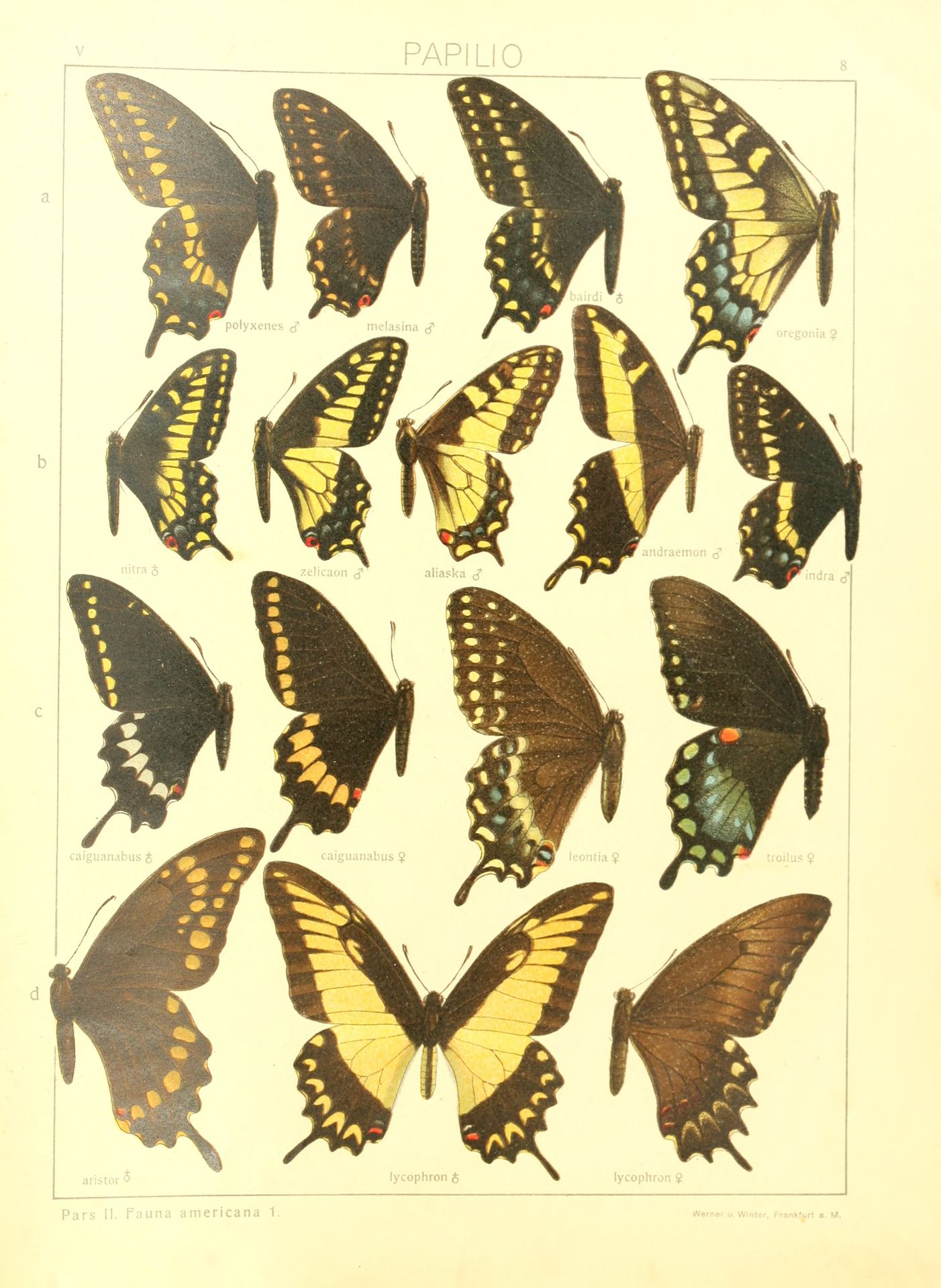
Distinguished from other North American swallowtails by the combination of yellow and black banding with hindwing tails, and from other P. machaon primarily by geographic location. Overlaps with P. zelicaon (Anise Swallowtail) in parts of its range; P. machaon oregonius has more extensive yellow on the forewing and different banding pattern. The subspecies P. m. hippocrates (found in Alaska and Yukon) differs in having more extensive blue markings. Genitalia examination may be required for definitive identification of some specimens.
Images
Appearance
display the characteristic yellow and black banded pattern of Papilio machaon, with tails on the hindwings. The Oregon typically shows reduced blue and red spotting on the hindwings compared to European . Wingspan ranges approximately 50-70 mm. Larvae are green with black bands and orange spots, featuring the retractable osmeterium () typical of papilionid caterpillars. Early instar larvae resemble bird droppings, a common defensive mimicry in Papilio .
Habitat
Occurs in open including meadows, riparian areas, and disturbed sites where larval plants grow. Associated with moist valleys, stream banks, and agricultural areas in the Pacific Northwest. Elevation range extends from lowlands to moderate elevations in mountainous regions.
Distribution
to the Pacific Northwest of North America, including Oregon, Washington, and adjacent parts of Idaho and British Columbia. The subspecific range is bounded by the Cascade Range and extends eastward into the interior basins.
Seasonality
are active from late spring through summer, with peak typically occurring June to August. Multiple may occur in favorable years, with the number of varying by latitude and elevation.
Diet
Larvae feed on plants in the Apiaceae (carrot ), including of Lomatium, Perideridia, and cultivated parsley and carrot. nectar at a variety of flowers including thistles, milkweeds, and composites.
Host Associations
- Lomatium - larval foodplantNative umbelliferous plants
- Perideridia - larval foodplantNative umbelliferous plants
- Daucus carota - larval foodplantWild carrot, introduced
- Petroselinum crispum - larval foodplantCultivated parsley
Life Cycle
are deposited singly on plant leaves. Larvae pass through five instars, with early instars exhibiting bird-dropping mimicry and later instars displaying eyespot patterns and eversible osmeterium for defense. occurs on host plants or nearby vegetation, with the chrysalis resembling a twig or dead leaf. occurs as pupa in most of the range. Development time varies with temperature; complete may occur in 6-8 weeks under favorable conditions.
Behavior
engage in for mate location, with males patrolling ridge tops and summits. Both sexes visit mud puddles and moist ground for mineral uptake. is strong and direct, with adults capable of sustained gliding. Males exhibit territorial behavior at hilltop sites. Larvae display (playing dead) when disturbed, in addition to osmeterium eversion.
Ecological Role
function as for diverse flowering plants. Larvae serve as herbivores, consuming plant and transferring nutrients to higher . The participates in mimicry complexes and serves as prey for birds, , and other . fluctuations may indicate quality changes in riparian and meadow .
Human Relevance
Subject to collecting and observation. Occasionally considered a minor agricultural pest when larvae feed on cultivated parsley, carrot, or dill. Featured in regional conservation assessments due to loss in the Willamette Valley and other parts of its range. Not listed under federal or most state statutes, though local may be threatened by development and agricultural intensification.
Similar Taxa
- Papilio zelicaonOverlaps in range and shares similar size and general appearance; differs in forewing pattern with P. zelicaon having more black and less yellow on forewing, and lacking the complete yellow band characteristic of P. machaon
- Papilio polyxenesSmaller black swallowtail with reduced yellow markings; no hindwing tails in most , and different larval plant preferences
- Papilio machaon hippocratesAnother North American of P. machaon found in Alaska and Yukon; differs in more extensive blue and red spotting on hindwings
More Details
Taxonomic Status
The P. m. oregonius was described by Henry Edwards in 1876 based on specimens from Oregon. Its validity has been questioned in some treatments, with some authors synonymizing it under P. m. hippocrates or recognizing it as a distinct western North American entity. Molecular studies suggest limited divergence from other Nearctic subspecies.
Conservation Context
The Willamette Valley in Oregon has experienced significant loss due to agricultural conversion and urban development. The is considered a of conservation concern in Oregon, though it remains relatively common in appropriate habitat across much of its range.
Sources and further reading
- BugGuide
- NCBI Taxonomy
- Bird droppings, snake eyes, dead leaves: Swallowtails, Papilio spp. — Bug of the Week
- Papilionoidea | Blog
- Swallowtails where art thou? Swallowtail butterflies, Papilionidae — Bug of the Week
- Provisional checklist of European butterfly larval foodplants
- Parsley poacher: Black swallowtail caterpillar, Papilio polyxenes — Bug of the Week
- Swallowtail soiree - Papilio glaucus — Bug of the Week