
Archaeoprepona
Fruhstorfer, 1916
Preponas
Species Guides
1- Archaeoprepona demophon(one-spotted prepona)
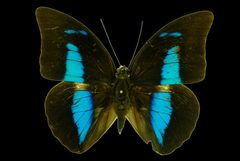
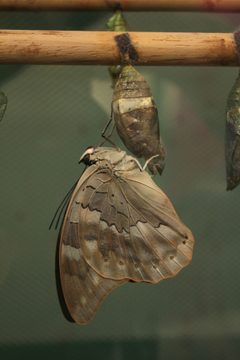
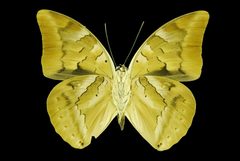
Archaeoprepona is a of Neotropical charaxine butterflies in the Nymphalidae, established by Hans Fruhstorfer in 1916. The genus comprises approximately eight distributed from Mexico through Central America to northern South America and the Caribbean. These butterflies are characterized by dark upperside wing surfaces with distinct bright blue bands, contrasting with pale brownish undersides. Most species were originally described in other genera, notably Papilio and Prepona, before being transferred to Archaeoprepona. The genus has been subject to taxonomic revision, with Noreppa synonymised under Archaeoprepona based on morphological and molecular evidence from stages.
Pronunciation
How to pronounce Archaeoprepona: //ˌɑːrki.oʊpriˈpoʊnə//
These audio files are automatically generated. While they are not always 100% accurate, they are a good starting point.
Identification
Archaeoprepona are distinguished from similar charaxine butterflies by the specific pattern of the blue band on dark wings, combined with pale brownish undersides. They differ from Prepona species by subtle wing shape and pattern details, though historical confusion between these necessitates careful examination. Within the genus, species identification relies on the number and position of blue spots or bands, the extent of orange or red markings on the upperside, and details of the underside pattern. A. demophon (one-spotted prepona) has a single blue spot on the forewing, while A. amphimachus (turquoise-banded shoemaker) shows a more extensive turquoise band. Examination of genitalia or stage may be required for definitive identification of some species pairs.
Images
Habitat
Tropical and subtropical forests from lowland rainforest to montane elevations. are most commonly encountered in forest and along forest edges. Larval stages develop on plants in forest understory and mid-canopy. The shows association with intact or partially disturbed forest , with distribution tied to the presence of Lauraceae host plants. Some species have been documented in forest fragments, suggesting of moderate habitat modification provided host plants persist.
Distribution
Mexico (southern regions), Central America (Guatemala, Belize, Honduras, Nicaragua, Rica, Panama), northern South America (Colombia, Venezuela, Ecuador, Peru, Bolivia, Brazil), and the Caribbean islands. The is restricted to the , with individual showing varying degrees of geographic restriction within this range.
Seasonality
are active year-round in equatorial regions, with peak abundance varying locally. In more seasonal regions at the northern and southern range margins, activity is concentrated during warmer, wetter months. Specific phenological data for individual is limited in available sources.
Diet
feed on rotting fruit, fermenting fruit juices, and carrion. They have been observed at traps using fermented fruit or dead animal matter. Larvae feed exclusively on leaves of plants in the Lauraceae, including such as Cinnamomum, Nectandra, Ocotea, and Persea.
Host Associations
Life Cycle
Complete with four stages: , larva, pupa, and . Eggs are spherical with ribbed surfaces, laid on plant leaves. Larvae pass through five instars, showing dramatic color changes from dark with prominent scoli (spine-like projections) in early instars to green with cryptic longitudinal stripe patterning resembling leaf midribs in later instars. The pupa is angular with projections, exhibiting strong twig or leaf mimicry in green or brown color morphs. occurs on the host plant or nearby vegetation. Developmental duration varies with temperature and ; specific timing data is not available in sources.
Behavior
are powerful, fast fliers that typically remain in the forest but descend to feed on rotting fruit and carrion on the forest floor. They are strongly attracted to stations with fermented fruit or dead animals, a exploited by collectors and researchers. When feeding, they may remain motionless for extended periods with wings closed, showing the cryptic underside. Adults are most active during daylight hours, with peak activity in morning and late afternoon. Larvae are solitary feeders that rest on leaf surfaces, relying on for protection.
Ecological Role
function as scavengers in tropical forest , contributing to nutrient cycling through consumption of decaying fruit and carrion. Larvae are folivores that process leaf material from Lauraceae trees, potentially influencing plant and contributing to forest nutrient dynamics. The serves as prey for various , , and parasitic flies, forming part of complex tropical . Their association with specific host plant suggests specialized plant-insect coevolutionary relationships.
Human Relevance
Collected for scientific study and private collections due to their striking appearance. are occasionally featured in houses and exhibits. The attraction of adults to stations makes them accessible for ecological study and citizen science observation. Larvae have potential significance for forestry where Lauraceae are cultivated, though direct economic impact appears minimal. Some species are referenced in popular butterfly field guides and natural history literature.
Similar Taxa
- PreponaHistorically confused with Archaeoprepona, with many transferred between ; differs in subtle wing shape and pattern details, though definitive separation often requires examination of genitalia or stages
- MorphoShares large size, dark ground color, and blue iridescence, but Morpho show more extensive blue coloration across the wing surface rather than a discrete transverse band, and have more rounded wing margins
- AgriasFormerly included in separate but closely related based on stage ; Agrias typically show more extensive and vivid red, orange, or blue markings with different pattern arrangements
Misconceptions
The has frequently been treated as synonymous with or subsumed within Prepona in older literature and some modern sources, leading to confusion in attribution. The Catalogue of Life currently lists Archaeoprepona as a synonym of Prepona, though this classification is not universally accepted and molecular and morphological evidence supports its recognition as a distinct genus.
More Details
Taxonomic History
Most were described before the establishment of Archaeoprepona in 1916, originally placed in Papilio or other . The type species, Archaeoprepona demophon, was first described as Papilio demophon by Linnaeus in 1758. Recent phylogenetic studies based on stage and molecular data support the synonymisation of Noreppa with Archaeoprepona and clarify relationships within the Preponini.
Etymology
The name Archaeoprepona combines Greek 'archaeo-' (ancient or primitive) with 'Prepona', the related genus, suggesting an ancestral or primitive position relative to Prepona. epithets include mythological references (amphimachus, a figure in Greek mythology) and descriptive terms.
Sources and further reading
- BugGuide
- Wikipedia
- GBIF taxonomy match
- iNaturalist taxon
- NCBI Taxonomy
- Catalogue of Life
- A Big Butterfly-and-Bee Day at the Bohart | Bug Squad
- At the Bohart: Life Is Better With Bugs | Bug Squad
- Immature stages of the turquoise‐banded shoemaker Archaeoprepona amphimachus pseudomeander (Fruhstorfer, 1906) and a comparative review of the Preponini (Lepidoptera: Nymphalidae)