
Hypna
Hübner, 1819
jazzy leafwing, marbled leafwing, silver-studded leafwing
Species Guides
1- Hypna clytemnestra(Silver-studded Leafwing)
Hypna is a in the Nymphalidae, containing only Hypna clytemnestra. The is the largest member of the tribe Anaeini and is known for its striking leaf-mimicry. The jazzy leafwing, marbled leafwing, and silver-studded leafwing refer to this single species. It is considered uncommon across its range.

Pronunciation
How to pronounce Hypna: /ˈhɪpnə/
These audio files are automatically generated. While they are not always 100% accurate, they are a good starting point.
Identification
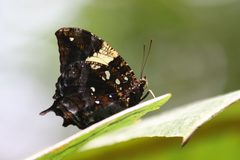
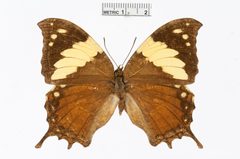
Distinguished from other leafwing butterflies (Anaeini) by its larger size. The combination of black forewings with two broad white transverse bands and brown hindwings separates it from similar . The dead-leaf undersides are highly variable in tone but consistently leaf-shaped with detailed venation patterns.
Images
Appearance
Large with forewing uppersides black with white marginal spots and two prominent white transverse bands. Hindwing uppersides predominantly brown. Undersides vary from dark brown to whitish, closely resembling dead leaves.
Habitat
Lowland and foothill forests from 100–1,200 meters elevation. Occurs in tropical and subtropical forested environments.
Distribution
Mexico to the Amazon basin, including Central America, northern South America, and the Caribbean (Cuba). Specific occur in: Nicaragua to Brazil and Suriname; Peru, Bolivia, Panama; Venezuela, Colombia; Mexico (Oaxaca); Brazil (Pernambuco, Mato Grosso); and Cuba.
Diet
Larvae feed on Croton floribundus (Euphorbiaceae). feed on rotting fruits.
Host Associations
- Croton floribundus - larval plant Euphorbiaceae
Behavior
are known to visit rotting fruit. The cryptic underside coloration suggests roosting that relies on camouflage against dead leaf litter.
Ecological Role
may contribute to nutrient cycling through consumption of decaying fruit. Larval herbivory on Croton floribundus represents a specialized plant-insect association.
Human Relevance
Featured on a Cuban postage stamp with value of 13 centavos. Collected for scientific study and observation; uncommon in nature and not frequently encountered.
Similar Taxa
- Other Anaeini genera (e.g., Anaea, Memphis)Share leafwing and dead-leaf mimicry, but Hypna clytemnestra is notably larger and has distinctive black-and-white forewing pattern above
More Details
Philately
Hypna clytemnestra has been depicted on Cuban postage stamps, indicating cultural recognition in the Caribbean.
Subspecies diversity
Eight recognized reflect broad geographic distribution and regional variation across Mesoamerica and South America.