
Zizula cyna
(W.H. Edwards, 1881)
cyna blue
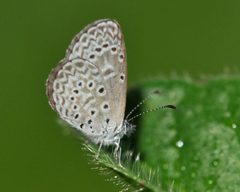
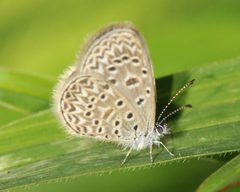
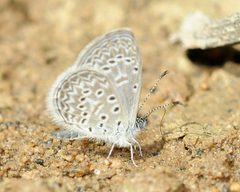
Zizula cyna, commonly known as the cyna blue, is a small in the Lycaenidae. display violet blue upperwings and pale gray underwings marked with tiny black dots. The species is active from March to November in most of its range, with adults feeding on flower nectar and larvae developing on flower buds of Acanthaceae species.
Pronunciation
How to pronounce Zizula cyna: /zɪˈzuːlə ˈsaɪnə/
These audio files are automatically generated. While they are not always 100% accurate, they are a good starting point.
Identification
Distinguished from similar lycaenid butterflies by its small size (16–22 mm wingspan), violet blue upperwing coloration, and pale gray underwings with tiny black dot pattern. The combination of size, coloration, and underwing pattern separates it from other blue butterflies in its range.
Images
Habitat
Subtropical areas and deserts. Strays occasionally found in more temperate regions.
Distribution
Native range extends from southern Texas south through Mexico and Central America to Argentina in South America. Strays documented as far north as northern Texas, Kansas, and southern Arizona.
Seasonality
on wing from March to November.
Diet
Larvae feed on flower buds of Acanthaceae . feed on flower nectar.
Host Associations
- Acanthaceae - larval food plantflower buds
Similar Taxa
- other Lycaenidae bluessimilar size and coloration, but distinguished by underwing pattern and specific shade of violet blue
- stray blues in northern rangestrays may be confused with resident ; confirmation requires examination of underwing pattern and size