
Plebejus optilete
(Knoch, 1781)
Cranberry Blue
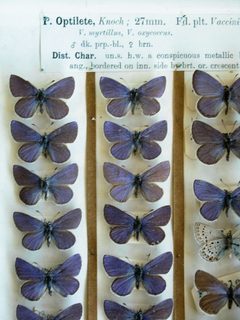
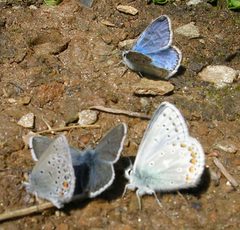
Plebejus optilete, commonly known as the Cranberry Blue, is a montane lycaenid found in European mountain systems. The species has a restricted distribution in Slovenia, limited to six separate sites on the crests of the western Pohorje Mountains. It is associated with silicate grasslands containing abundant Vaccinium species, which likely serve as larval plants. monitoring indicates declining abundance across most sites, with degradation from overgrazing, inappropriate land use, and tourism development posing significant threats.
Pronunciation
How to pronounce Plebejus optilete: //ˈpliː.bɛ.jəs ˌɒp.tɪˈliː.te//
These audio files are automatically generated. While they are not always 100% accurate, they are a good starting point.
Identification
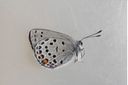
The is distinguished from similar Plebejus blues by its montane specificity and association with Vaccinium-dominated . Identification requires careful separation from other European blue butterflies (Lycaenidae), particularly in the Plebejus , where external can be similar. Definitive identification may necessitate examination of genitalia or molecular methods.
Images
Habitat
Rich flowering montane grasslands on silicate substrates, specifically the Homogyno-alpine-Nardetum plant association. The features high proportions of blueberries (Vaccinium) and Common Heather (Calluna vulgaris). Key nectar sources for include European Goldenrod (Solidago virgaurea) and Mountain Arnica (Arnica montana), in addition to Common Heather.
Distribution
Western Pohorje Mountains, Slovenia; six separate sites on mountain crests. The has a highly restricted range within this single mountain system.
Seasonality
period occurs during summer months; monitoring data collected over six years indicates pronounced fluctuations in abundance.
Diet
feed on nectar from European Goldenrod, Mountain Arnica, and Common Heather. Larval plants are inferred to be Vaccinium based on the and association, though this requires direct confirmation.
Host Associations
- Vaccinium - likely larval Inferred from 'Cranberry Blue' and association with high Vaccinium abundance; direct observation not confirmed in available sources
- Solidago virgaurea - nectar sourceEuropean Goldenrod; main nectar source for
- Arnica montana - nectar sourceMountain Arnica; main nectar source for
- Calluna vulgaris - nectar sourceCommon Heather; nectar source and
Human Relevance
Subject of conservation concern in Slovenia due to restricted range and decline. Management guidelines have been developed to address degradation from overgrazing, agricultural practices, and tourism development. Climate change represents a long-term potential threat to this montane .
Similar Taxa
- Other Plebejus speciesSimilar external in the blue group; requires careful identification, potentially using genitalia examination or molecular methods
More Details
Population trends
Six-year monitoring using transect methods revealed negative abundance trends at almost all sites, despite pronounced year-to-year fluctuations. The highest stability was observed at the Kope transect, where preservation was most effective.
Conservation status
Endangered by reduction and deterioration. Specific threats include overgrazing, inadequate agricultural use, inappropriate tourism development, and long-term climate change impacts on montane .
Sources and further reading
- BugGuide
- GBIF taxonomy match
- Matt Forister: Melissa Blue Butterfly and Colonization of Alfalfa | Bug Squad
- Bug Squad
- Hurray for the Red, White and Blue! | Bug Squad
- Blue Butterfly | Bug Squad
- Bug Eric: Mother (Nature's) Day in Madera Canyon
- Monitoring borovničevega mnogooka Plebejus optilete (Knoch, 1781) (Lepidoptera: Lycaenidae) na Pohorju Monitoring of the Cranberry Blue Plebejus optilete (Knoch, 1781) (Lepidoptera: Lycaenidae) in the Pohorje Mountains