
Echinargus
Nabokov, 1945
Reakirt's blue
Species Guides
1- Echinargus isola(Reakirt's Blue)
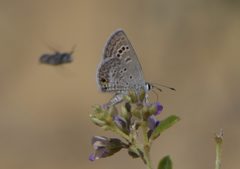
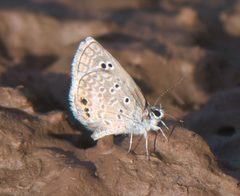
Echinargus is a in the Lycaenidae, containing the single Echinargus isola (Reakirt's blue). The genus was described by Vladimir Nabokov in 1945. The species is notable for its extensive migratory , regularly moving northward from its core range in Central America and the southern United States into northern regions.
Pronunciation
How to pronounce Echinargus: //ɛˌkaɪˈnɑːrɡəs//
These audio files are automatically generated. While they are not always 100% accurate, they are a good starting point.
Images
Distribution
Native to Central America and the extreme southern United States. Regularly migrates throughout most of the United States, reaching nearly to the Canada–United States border, with rare occurrences in the southern prairies of Canada.
Seasonality
are on wing from June to October in northern parts of the range, and year-round in southern regions.
Diet
Larvae feed on Fabaceae, particularly mesquites (Prosopis ). feed on flower nectar from spearmint, white sweet clover, and various other herbs.
Host Associations
- Prosopis - larval plantprimary ; larvae feed on mesquite
Life Cycle
Complete with , larva, pupa, and stages. Specific details of developmental timing and strategy not documented in available sources.
Behavior
Regularly migrates northward throughout much of the United States. are active fliers and feed on nectar from a variety of flowering herbs.
Ecological Role
Larval herbivore on leguminous plants; that visits flowers for nectar. Serves as prey for various throughout its range.
Similar Taxa
- HemiargusBoth are small lycaenid butterflies with blue coloration; however, Echinargus is and distinguished by specific wing pattern and structural features, and by its extensive migratory which is not characteristic of Hemiargus .
- CupidoSimilar small size and blue coloration in the Polyommatinae; Echinargus differs in wing venation, pattern details, and its unique migratory .