
Timochares
Godman & Salvin, 1896
Species Guides
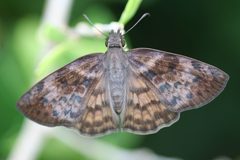
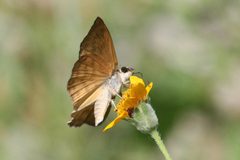
1- Timochares ruptifasciata(Brown-banded Skipper)
Timochares is a of skippers in the Hesperiidae, Pyrginae, established by Godman & Salvin in 1896. The genus contains three recognized distributed in the Neotropical region. Members of this genus are characterized by their banded wing patterns and relatively robust body form typical of pyrgine skippers.
Pronunciation
How to pronounce Timochares: /ˈtɪməˌkɛəriːz/
These audio files are automatically generated. While they are not always 100% accurate, they are a good starting point.
Identification
Timochares are distinguished from similar pyrgine skippers by their distinctive wing banding patterns: T. trifasciata and T. ruptifasciatus exhibit three transverse bands on the forewing, while T. runia has a reduced or modified pattern. The can be separated from closely related genera such as Nisoniades and Zopyrion by the arrangement and completeness of these fasciae, particularly the presence of a complete or nearly complete band. Antennal club shape and male genitalic structure provide definitive characters for identification.
Images
Distribution
Neotropical region. T. trifasciata occurs from Mexico through Central America to Colombia and Venezuela; T. ruptifasciatus ranges from Mexico to Panama; T. runia is known from Colombia.
Similar Taxa
- NisoniadesSimilar size and general pyrgine ; distinguished by wing pattern details and genitalic structure
- ZopyrionOverlaps in distribution and ; Timochares differs in band arrangement and antennal characteristics
More Details
Etymology
The name Timochares is derived from Greek mythology; Timochares was an architect who designed the lighthouse of Alexandria.
Species diversity
The is relatively -poor with only three described species, suggesting either genuine rarity or undercollection in poorly surveyed regions of their range.