
Troyus
Warren & Turland, 2012
Species Guides
1- Troyus fabulosus(Fabulous Skipper)
Troyus is a of in the Hesperiidae, subtribe Moncina. The genus was established in 2012 and contains Neotropical distributed from the Caribbean to the Amazon basin. At least two species are recognized: T. turneri from Jamaica and T. phyllides from the Peruvian Amazon.
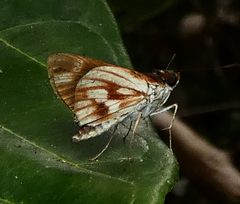
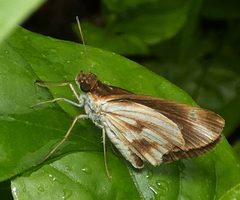
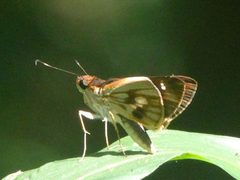
Pronunciation
How to pronounce Troyus: /ˈtrɔɪ.əs/
These audio files are automatically generated. While they are not always 100% accurate, they are a good starting point.
Images
Habitat
Lowland tropical rainforest, terra firme. Documented from Finca Las Piedras in Madre de Dios, Peru for T. phyllides.
Distribution
Jamaica (T. turneri); Peruvian Amazon, Madre de Dios region (T. phyllides).
Diet
Larvae of T. phyllides feed on the herbaceous grass Lasiacis ligulata (Poaceae: Panicoideae: Paniceae). Diet of other in the is not documented.
Host Associations
- Lasiacis ligulata Hitchcock & Chase - larval food plantPoaceae: Panicoideae: Paniceae; herbaceous understory grass in Peruvian Amazon
Life Cycle
Complete with five larval instars from to adulthood. Eggs, all larval instars, and have been documented for T. phyllides through direct rearing of specimens collected in nature.
Behavior
Larvae construct shelter structures using leaves of the plant.
Ecological Role
Herbivore feeding on understory grasses in tropical rainforest .
Similar Taxa
- ThoonBoth belong to subtribe Moncina and share similar larval including five instars, shelter construction, and grass-feeding habits. T. phyllides was studied concurrently with Thoon ponka in the same research program.