
Quasimellana
Burns, 1994
Species Guides
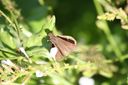
1- Quasimellana eulogius(common mellana)
Quasimellana is a of skippers ( Hesperiidae) erected by John Burns in 1994 to accommodate 24 previously scattered across multiple genera, with Quasimellana mexicana as the type species. The genus spans northern Argentina to the southern United States and is divided into three species groups (eulogius, sethos, and nicomedes) based on and distribution patterns. Fourteen species occur in North America. Male wingspans range from 11.4 to 17.9 mm, with most species averaging 14–16 mm.
Pronunciation
How to pronounce Quasimellana: /ˌkwɑːziːmɛˈlænə/
These audio files are automatically generated. While they are not always 100% accurate, they are a good starting point.
Identification
Distinguished from other Hesperiini by combination of small size, wing pattern elements, and male genitalia characteristics used in Burns' 1994 revision. The eulogius group is recognizable by the consistent yellow-orange coloration with dark venation in males. Separation from similar small skippers requires examination of genitalic and wing pattern details; the genus was established precisely because prior generic placements did not reflect natural groupings.
Images
Distribution
Northern Argentina to the southern United States, with fourteen in North America. Species group eulogius ranges from southern US to Brazil and Paraguay; sethos group from Mexico to Brazil and Bolivia with equal representation in North and South America; nicomedes group largely South American from Mexico to Argentina.
Similar Taxa
- Atrytone such as Quasimellana mexicana were originally described in Atrytone; distinguished by revised generic concepts based on genitalic and wing pattern characters
- Other Hesperiini generaQuasimellana was erected from previously placed across multiple that did not form natural groups; requires detailed morphological examination to distinguish
More Details
Taxonomic history
The was erected by John Burns in 1994, containing three groups and 24 species. Five species were newly described in that publication (Q. andersoni, Q. antipazina, Q. imperfida, Q. mielkei, Q. siblinga); the remaining 19 were transferred from other genera.
Species groups
Three informal groups recognized: eulogius (predominantly North American), sethos (equal North/South American distribution), and nicomedes (largely South American). These groups differ in geographic distribution and degree of .