
Atrytonopsis pittacus
(Edwards, 1882)
White-barred Skipper
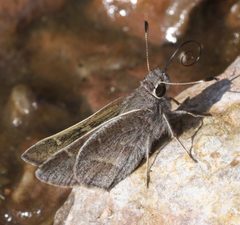
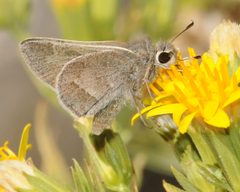
Atrytonopsis pittacus, the white-barred skipper, is a grass skipper in the Hesperiidae described by William Henry Edwards in 1882. It occurs in Central and North America. Males have been observed puddling at stream margins to obtain minerals. The has a MONA/Hodges number of 4085.
Pronunciation
How to pronounce Atrytonopsis pittacus: //ˌætrɪtoʊˈnɒpsɪs ˈpɪtəkəs//
These audio files are automatically generated. While they are not always 100% accurate, they are a good starting point.
Images
Habitat
Riparian areas with flowing water; observed in rocky streambeds and canyon environments with wet sand and soil margins.
Distribution
Central America and North America; documented in the southwestern United States including Arizona (Santa Rita Mountains, Madera Canyon).
Seasonality
Active in spring; observed in early May in southeastern Arizona.
Host Associations
- Riparian trees and plants - Males defend territories that include plants for caterpillars
Behavior
Males engage in puddling , sipping from wet sand and soil along stream margins to obtain minerals. Males have been observed defending territories that include plants. When puddling, individuals become relatively approachable and oblivious to nearby observers.
Ecological Role
Males transfer mineral nutrients obtained from puddling to females during mating, potentially contributing to nourishment.
Similar Taxa
- Other Atrytonopsis speciesCongeneric grass skippers in the same share similar and preferences
- Other Hesperiinae members share grass skipper characteristics including rapid, darting and association with grassy or riparian
More Details
Taxonomic identifier
MONA or Hodges number: 4085
Original description
Originally described as Pamphilus pittacus by William Henry Edwards in 1882