
Achalarus lyciades
(Hübner, 1819)
Hoary Edge
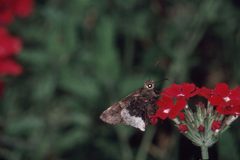
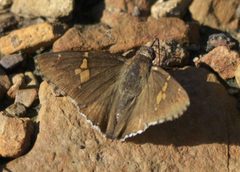
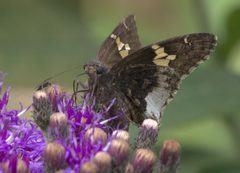
Achalarus lyciades, commonly known as the Hoary Edge, is a in the Hesperiidae. It is a medium-sized with distinctive wing patterning and is associated with leguminous plants. The species occurs in eastern North America and is active during the warmer months. are known to visit flowers for nectar.
Pronunciation
How to pronounce Achalarus lyciades: /əˈkælərəs laɪsiˈeɪdiːz/
These audio files are automatically generated. While they are not always 100% accurate, they are a good starting point.
Identification
The Hoary Edge can be distinguished from similar skippers by the pale, hoary-colored patch on the hindwing margin, which gives the its . The forewings are dark brown with small pale spots. It is larger and more robust than many related grass-skippers, with a wingspan of approximately 32–38 mm. The have hooked tips characteristic of the Hesperiidae. It resembles Achalarus casica (Desert Cloudywing) but occurs in different geographic regions and .
Images
Habitat
Found in open woodlands, forest edges, and along streams where plants grow. Occurs in areas with sandy or rocky soils supporting leguminous vegetation.
Distribution
Eastern North America, from southern Ontario and New England west to Minnesota and south to Texas and Florida. Present throughout the eastern United States with scattered records in adjacent Canadian provinces.
Seasonality
are active from late May through August, with peak activity in June and July. One to two per year depending on latitude.
Diet
Larvae feed on leaves of leguminous plants, particularly in the Lespedeza and Desmodium. feed on nectar from various flowers including milkweeds, dogbanes, and other summer-blooming plants.
Host Associations
- Lespedeza - larval foodplant
- Desmodium - larval foodplant
Life Cycle
are laid singly on plant leaves. Larvae construct leaf shelters by folding or tying leaves together with silk. occurs within these shelters or in leaf litter on the ground. Overwinters as a partially grown larva.
Behavior
perch on vegetation with wings partially open, darting out to investigate intruders or potential mates. Males are territorial and establish perches in sunny openings. Both sexes visit flowers for nectar and are rapid, erratic fliers typical of skippers.
Ecological Role
of various flowering plants. Larvae serve as herbivores on leguminous vegetation and as prey for and .
Human Relevance
Occasionally encountered by watchers and photographers. Not of economic importance. Serves as an for intact woodland with native legume understories.
Similar Taxa
- Achalarus casicaSimilar size and wing shape, but A. casica occurs in arid western regions and lacks the distinct hoary hindwing edge. A. lyciades has more extensive pale spotting on the forewing.
- Thorybes pyladesBoth are dark skippers with pale markings, but T. pylades (Northern Cloudywing) has a more diffuse, less defined pale patch on the hindwing and different proportions.