
Exyra semicrocea
(Guenée, 1852)
Pitcher Plant Mining Moth
Exyra semicrocea, commonly known as the Pitcher Plant Mining , is a small noctuid moth specialized on pitcher plants in the Sarracenia. The is to the southeastern United States coastal plain, where it completes its entire within pitcher plant pitchers. Its larvae are miners that feed internally on pitcher plant tissue, making this one of the few moth species adapted to this unusual .
Pronunciation
How to pronounce Exyra semicrocea: /ɛkˈsaɪ.rə sɛm.ɪˈkroʊ.ʃə/
These audio files are automatically generated. While they are not always 100% accurate, they are a good starting point.
Identification
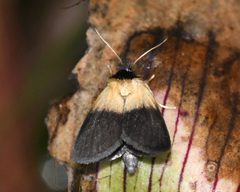
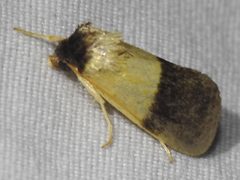
Distinguished from other Exyra by wing pattern and geographic range. Exyra fax is larger with more contrasting dark forewing markings and occurs further north. Exyra ridingsii has different wing venation and plant preferences. Identification often requires dissection or examination of larval host association. may be confused with small Plusiinae but are identified by association with Sarracenia pitchers.
Images
Appearance
Small with wingspan of 16–26 mm. Forewings are narrow and elongated, typically orange-brown to yellowish-brown with darker markings. Hindwings are paler, often yellowish or cream-colored. Body is slender with relatively long legs. are . Coloration provides camouflage among pitcher plant foliage.
Habitat
Wetland supporting pitcher plants, primarily pine savannas, seepage bogs, and pocosins. Found in open, sunny areas with standing water or saturated soils where Sarracenia occur. Habitats are fire-maintained and often nutrient-poor.
Distribution
Southeastern United States: from northern North Carolina south to Florida and west to eastern Texas. Also recorded from New Jersey. Distribution corresponds closely to range of Sarracenia .
Diet
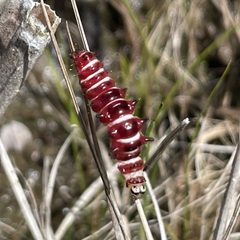
Larvae feed internally as miners within pitchers of Sarracenia minor, Sarracenia rubra, Sarracenia alata, Sarracenia leucophylla, and Sarracenia psittacina. Larvae consume pitcher tissue and detritus within the pitcher. feeding habits are not documented.
Host Associations
- Sarracenia minor - larval pitcher plant miner
- Sarracenia rubra - larval pitcher plant miner
- Sarracenia alata - larval pitcher plant miner
- Sarracenia leucophylla - larval pitcher plant miner
- Sarracenia psittacina - larval pitcher plant miner
Life Cycle
Complete with , larva, pupa, and stages. Larvae develop within living pitchers, mining pitcher tissue. occurs within the pitcher or in surrounding substrate. Multiple per year are likely given the extended growing season in its range, though specific is not well documented.
Behavior
Larvae are endophagous miners, living and feeding within the tubular leaves of pitcher plants. This protects larvae from and the digestive that pitcher plants use to trap insect prey. are and are attracted to light.
Ecological Role
Specialized herbivore of pitcher plants. Larval mining may affect pitcher plant growth and nutrient balance, though impacts are likely minor given the coevolved relationship. Serves as prey for within pitcher plant .
Human Relevance
for healthy pitcher plant bog . Of interest to lepidopterists and ecologists studying plant-insect . Not of economic importance. Threatened by loss and fire suppression in wetland habitats.
Similar Taxa
- Exyra faxSimilar size and preference, but larger with darker, more contrasting forewing markings; occurs further north in pitcher plant range
- Exyra ridingsiiCongeneric with different wing venation and plant associations; more northern distribution
- Small Plusiinae moths (e.g., Autographa species)Similar general appearance and size, but lack specialized association with pitcher plants and have different wing patterns
More Details
Taxonomic note
Originally described as Xanthoptera semicrocea by Guenée in 1852; later transferred to Exyra. The genus Exyra contains three North American , all specialized on pitcher plants.
Conservation context
Dependent on intact pitcher plant bog , which have declined significantly due to drainage, development, and fire suppression. trends are poorly documented but likely follow plant availability.