
Oncocnemidinae
Forbes & Franclemont, 1954
Genus Guides
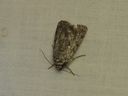
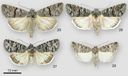
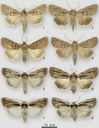
14Oncocnemidinae is a of Noctuidae (owlet moths) characterized by predominantly , distinguishing them from most noctuids. are small to medium-sized with generally dark forewings and white or off-white hindwings often marked with broad black stripes. The subfamily exhibits a distinctive morphological trait: deep lateral invaginations forming a transverse channel across abdominal segment A1 to the . Molecular supports the monophyly of several included .
Pronunciation
How to pronounce Oncocnemidinae: /ˌɒŋkoʊkˈnɛmɪdɪni/
These audio files are automatically generated. While they are not always 100% accurate, they are a good starting point.
Identification
can be recognized by activity in contrast to most Noctuidae. Males possess bipectinate . The is morphologically defined by deep lateral invaginations creating a transverse channel across abdominal segment A1 to the (the "A1 transverse channel") in many . Forewings range from pale to dark gray; hindwings are white or off-white with broad black stripes in many . Female genitalia feature a broad, thick, crenulate segment of the ductus bursae.
Images
Habitat
Arid and semi-arid regions of southwestern North America including Chihuahuan desert and Madrean Archipelago; extends to northern Europe and Scandinavia based on catalog records. Specific associations for larvae remain undocumented.
Distribution
Southwestern United States (Arizona, New Mexico, Texas) and Mexico; northern Europe including Norway and Sweden. The North American Supralathosea and related genera (Eulathosea, Infralathosea) are restricted to the southwestern United States and adjacent Mexico. European records include multiple Sympistis and Calophasia lunula.
Seasonality
fly year-round in southwestern North American deserts, including winter months; activity patterns in northern European not specified in sources.
Behavior
are , flying during daylight hours unlike most Noctuidae. Males have bipectinate . Adults are active throughout the year in desert , including winter. Despite year-round activity, are uncommon in collections.
Similar Taxa
- Noctuidae (other subfamilies)Most other noctuid are ; Oncocnemidinae distinguished by and A1 transverse channel .