
Parabagrotis sulinaris
Lafontaine, 1998
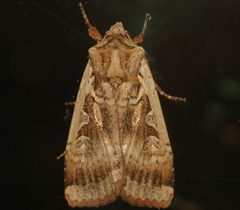
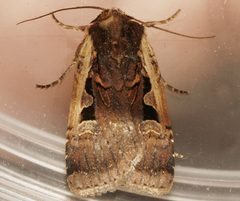
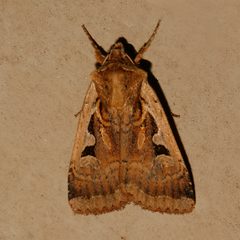
Parabagrotis sulinaris is a of or dart moth in the Noctuidae, described by Lafontaine in 1998. It belongs to the Parabagrotis, a group of noctuid found in North America. The species is known from distribution records in North America, with 209 observations recorded on iNaturalist. It is assigned Hodges number 11048.
Pronunciation
How to pronounce Parabagrotis sulinaris: /ˌpærəˈbæɡroʊtɪs ˌsuːlɪˈnærɪs/
These audio files are automatically generated. While they are not always 100% accurate, they are a good starting point.
Identification
Distinguished from other Parabagrotis by specific morphological characteristics established in the original description by Lafontaine (1998). As a member of the Noctuidae, it possesses the -typical features of stout-bodied with cryptic coloration. Specific diagnostic traits for separating P. sulinaris from such as P. formais require examination of genitalic and wing pattern details.
Images
Distribution
North America. Distribution records confirm presence in this region, though specific range boundaries within North America are not detailed in available sources.
Behavior
, as evidenced by its membership in Noctuidae and the attraction of congeneric to blacklighting displays.
Similar Taxa
- Parabagrotis formaisCongeneric in the same , distinguished by specific morphological and genitalic characteristics described by Lafontaine (1998)
More Details
Taxonomic history
Described by J.D. Lafontaine in 1998, representing a relatively recent addition to the North American noctuid fauna.
Cataloging
Assigned MONA ( of North America) or Hodges number 11048 for standardized reference in lepidopteran databases.
Sources and further reading
- BugGuide
- Wikipedia
- GBIF taxonomy match
- iNaturalist taxon
- NCBI Taxonomy
- Catalogue of Life
- Blacklighting at the Bohart: They Saw the Light | Bug Squad
- What Will You See at Bohart Museum Open House | Bug Squad
- Oh, What a (Moth) Night! | Bug Squad
- Mark Your Calendar for 'Moth Night' at Bohart Museum: July 30 | Bug Squad
- A Night at the Bohart Museum: Moth Night on Saturday, July 22 | Bug Squad