
Actebia balanitis
Grote, 1873
Bracketed Dart, Cutworm Moth, Bracketed Dart Moth
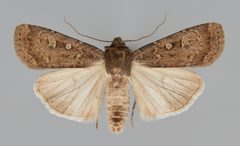
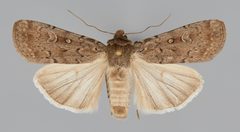
Actebia balanitis is a noctuid native to western North America, first described by Augustus Radcliffe Grote in 1873. have a wingspan of 36–40 mm and are active from June to August, with one per year. The was historically confused with the Palearctic Actebia squalida, leading to misreporting of that species from North America.
Pronunciation
How to pronounce Actebia balanitis: //ækˈtiːbiə ˌbæləˈnaɪtɪs//
These audio files are automatically generated. While they are not always 100% accurate, they are a good starting point.
Identification
are distinguished by wingspan of 36–40 mm. The has been confused with Actebia squalida, a Palearctic species; accurate identification requires careful examination to separate from this and potentially other Actebia species.
Images
Habitat
Found in dry interior regions of western North America, including grassland and open from Alaska and Yukon south to Colorado and west to Washington and British Columbia.
Distribution
North America: north-east Alaska and western Yukon east to east-central Saskatchewan and north-central South Dakota, south to northern Colorado, west to central Washington and dry interior of British Columbia, northern North Dakota, and Idaho. Canadian provinces: Alberta, Manitoba, Saskatchewan.
Seasonality
on wing June to August depending on location. One per year.
Diet
Larvae probably feed on various grasses.
Life Cycle
One per year.
Human Relevance
Subject of taxonomic confusion with Actebia squalida that led to erroneous range reports.
Similar Taxa
- Actebia squalidaHistorically confused with A. balanitis, leading to misreporting of A. squalida from North America; A. squalida is Palearctic in distribution.
Misconceptions
Previously misreported as Actebia squalida in North American literature due to taxonomic confusion between the two .