
Renia factiosalis
Walker, 1859
Sociable Renia Moth, Dark-banded Renia
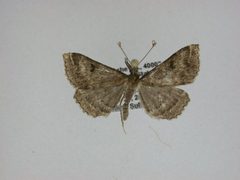
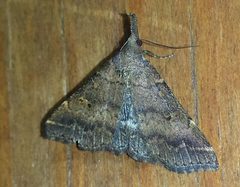
Renia factiosalis is a litter moth in the Erebidae, commonly known as the Sociable Renia or Dark-banded Renia. The was described by Francis Walker in 1859. It is widespread in eastern North America, ranging from southern Canada to Florida and Texas. The moth has a wingspan of approximately 24 mm and exhibits regional variation in number, with one generation in the northeast and multiple generations in southern .
Pronunciation
How to pronounce Renia factiosalis: //ˈɹɛ.ni.ə fækˌti.oʊˈsɑː.lɪs//
These audio files are automatically generated. While they are not always 100% accurate, they are a good starting point.
Identification
Distinguished from other Renia by the dark banding pattern on the forewings. The specific epithet 'factiosalis' and 'Dark-banded Renia' reference this characteristic pattern. Separation from requires examination of wing pattern details; precise distinguishing features from similar species such as Renia discoloralis or other Herminiinae litter moths are not documented in available sources.
Images
Habitat
Terrestrial environments where leaf litter accumulates. The is associated with supporting decomposing organic matter.
Distribution
Eastern North America, from southern Canada southward through the eastern United States to Florida and west to Texas.
Seasonality
are active from May to September. time varies geographically: one generation per year in the northeastern United States, two generations in Missouri, and multiple generations in southern portions of the range.
Diet
Larvae feed on organic matter, specifically including dead leaves.
Life Cycle
Holometabolous development with complete . Larval stage feeds on detritus. Number of per year varies by latitude: in the northeast, in Missouri, and multivoltine in the south.
Behavior
are and attracted to light. The 'Sociable Renia' may reflect aggregative at light sources or , though specific behavioral documentation is limited.
Ecological Role
Larvae function as , contributing to decomposition of leaf litter and nutrient cycling in forest .
Human Relevance
No documented economic importance. Occasionally encountered by enthusiasts at light traps. Not known to be a pest .
Similar Taxa
- Other Renia speciesCongeneric litter moths in the Herminiinae share similar size, association, and general ; precise identification requires examination of wing pattern details.
- Herminiinae litter moths generally members share detritivorous larval habits and , creating potential confusion in field identification.
More Details
Taxonomic history
Described by Francis Walker in 1859. Placed in Herminiinae of Erebidae. The epithet 'factiosalis' appears to reference the banded ('fascia') wing pattern.
Regional generation variation
The documented north-south gradient in voltinism (one to multiple ) reflects phenotypic plasticity or local to thermal regime and growing season length.