
Gondysia telma
Sullivan, 2010
Gondysia telma is a in the Erebidae, described by Sullivan in 2010. It is to the southeastern United States, where it inhabits swamp forests with standing water. The species name derives from the Greek word for standing water, reflecting its hydric forest . are active from April through September, with multiple throughout its range.
Pronunciation
How to pronounce Gondysia telma: /ɡɒnˈdɪsiə ˈtɛlmə/
These audio files are automatically generated. While they are not always 100% accurate, they are a good starting point.
Identification
Gondysia telma can be distinguished from related by its specific association with hydric swamp forest in the Coastal Plain. The Gondysia was erected to accommodate species previously placed in Dysgonia, and species-level identification within this genus requires careful examination of genitalic .
Images
Appearance
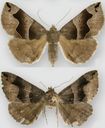
Forewing length 19–20 mm. No further morphological details are documented in available sources.
Habitat
Swamp forests with standing water. In emergent forests, red maples (Acer rubrum) tend to dominate, while mature forests are more mixed with cypress (Taxodium spp.) often the large tree. These hydric forests occur in the Coastal Plain of the southeastern United States.
Distribution
United States: North Carolina southward to the Florida Panhandle and central Florida, westward to Texas. One record from Indiana represents the northernmost known occurrence.
Seasonality
on wing from April through September. Multiple occur throughout the range.
Life Cycle
Multiple brooded throughout range. No further details on stages or development are documented.
Similar Taxa
- Dysgonia spp.Gondysia was previously treated as part of Dysgonia; in both share similar overall and require genitalic examination for definitive separation
More Details
Etymology
The specific epithet 'telma' derives from the Greek word for standing water, directly referencing the ' obligate association with hydric swamp forest .
Taxonomic History
Gondysia was erected as a new by Sullivan in 2010 to accommodate this and related previously placed in Dysgonia.