
Doryodes bistrialis
Geyer, 1832
double-lined doryodes moth, Double-lined Doryodes
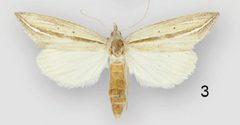
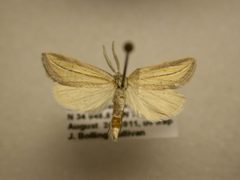
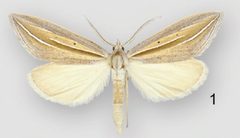
A small erebid of eastern North America, distinguished by narrow forewing stripes and whitish hindwings. fly from spring through fall, with year-round activity in Florida. Larvae feed on wiregrass (Aristida stricta) in pine-dominated . Once synonymized with Doryodes grandipennis, it was later recognized as a valid .
Pronunciation
How to pronounce Doryodes bistrialis: /ˈdɔr.i.oʊˌdiːz bɪsˈtraɪ.ə.lɪs/
These audio files are automatically generated. While they are not always 100% accurate, they are a good starting point.
Identification
are smaller than with forewing length 13–15.5 mm (males) and 14.5–16 mm (females). The medial longitudinal stripe on the forewing is markedly narrower than in Doryodes spadaria. Hindwings are whitish rather than buff-colored through June emergences. The narrower dark stripe on the forewing provides the primary visual cue for field identification.
Images
Habitat
Wet pine flatwoods and pine savannas—open pine-dominated characterized by sandy soils, seasonal wetness, and understory grasses.
Distribution
Eastern United States, specifically recorded from Delaware, Virginia, Mississippi, and Florida.
Seasonality
fly from April to October in North Carolina; year-round in Florida.
Diet
Larvae feed on Aristida stricta (wiregrass), a bunchgrass native to southeastern pine savannas.
Host Associations
- Aristida stricta - larval food plant
Similar Taxa
- Doryodes spadariaLarger with broader medial stripe on forewing; hindwings buff-colored rather than whitish in early-season individuals
- Doryodes grandipennisHistorically treated as ; now recognized as distinct
Misconceptions
Formerly considered a synonym of Doryodes grandipennis, leading to confusion in older literature.