
Manulea
Wallengren, 1863
Species Guides
1Manulea is a of lichen-feeding in the Erebidae, established by Wallengren in 1863. The genus belongs to the subtribe Lithosiina and is characterized by larvae that feed primarily on lichens. It contains approximately 25 described distributed across Eurasia, with recent taxonomic revisions recognizing multiple subgenera including Agenjoa and Churingosia.
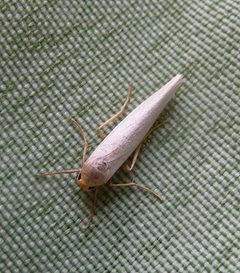
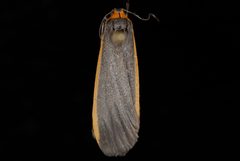
Pronunciation
How to pronounce Manulea: //maˈnuː.le.a//
These audio files are automatically generated. While they are not always 100% accurate, they are a good starting point.
Images
Distribution
The has a Palearctic and Oriental distribution, with recorded across Europe, Russia, East Asia (China, Japan, Korea), and Southeast Asia (Myanmar, Northeast India, northern Indochina).
Diet
Larvae feed primarily on lichens. Manulea complana larvae have been observed feeding on Parmelia lichens and on leaves of Quercus, Fagus, Prunus, Salix, and Rubus.
Ecological Role
Larvae function as lichenivores, consuming lichen and potentially contributing to nutrient cycling in forest and woodland .
Similar Taxa
- EilemaManulea was historically treated as part of Eilema; separated based on genitalia and larval characteristics. Manulea larvae feed on lichens and plant leaves, whereas Eilema sensu stricto shows different associations.
- BruniaManulea replana was transferred to Brunia; these can be confused but differ in wing pattern and male genitalia structure.