
Clemensia ochreata
Schmidt & Sullivan, 2018
Little Ochre Lichen Moth
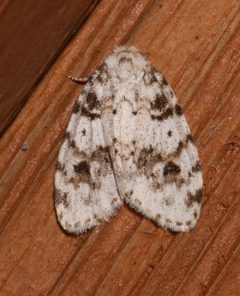
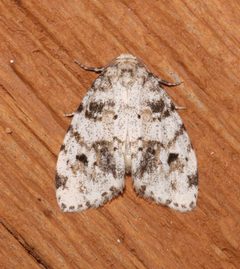
Clemensia ochreata, known as the Little Ochre Lichen , is a of tiger moth described in 2018. It belongs to the Clemensia within the Arctiinae. The species has accumulated over 500 observations on iNaturalist, indicating it is moderately well-documented. It is a recently described species with limited published ecological literature.
Pronunciation
How to pronounce Clemensia ochreata: /klɛˈmɛn.si.a ɔkˈrɛ.a.tə/
These audio files are automatically generated. While they are not always 100% accurate, they are a good starting point.
Identification
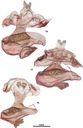
As a recently described (2018), diagnostic features distinguishing C. ochreata from are documented in the original description by Schmidt & Sullivan. The specific epithet "ochreata" suggests ochre coloration. Identification requires comparison with other Clemensia species, particularly C. albata and related . Genitalia dissection is likely necessary for definitive identification given the recency of description and similarity among Clemensia species.
Images
Distribution
The has been documented across multiple observations on iNaturalist, though specific geographic range details from peer-reviewed sources are not available in the provided context. The Clemensia has distribution centered in North America.
Similar Taxa
- Clemensia albata with similar size and pattern; historically confused before C. ochreata was described as a distinct in 2018
More Details
Recent description
This was formally described in 2018, making it one of the more recently recognized tiger moth species in North America. The recency of description means that much of its natural history remains to be documented.
iNaturalist documentation
With over 530 observations recorded on iNaturalist, this has substantial citizen science documentation, though verification of these records against voucher specimens may be necessary given identification challenges within the .