
Lycomorphodes sordida
(Butler, 1877)
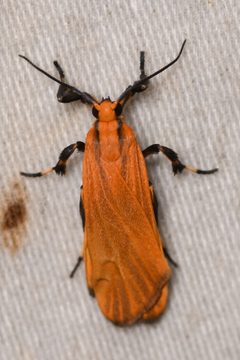
Lycomorphodes sordida is a small in the Erebidae, Arctiinae. It was described by Arthur Gardiner Butler in 1877 from specimens collected in the Neotropical region. The occurs from the southwestern United States through Central America to northern South America. have a wingspan of 19–21 mm.
Pronunciation
How to pronounce Lycomorphodes sordida: /ˌlaɪkoʊˈmɔːrfəˌdiːz ˈsɔːrdɪdə/
These audio files are automatically generated. While they are not always 100% accurate, they are a good starting point.
Identification
The small wingspan (19–21 mm) distinguishes it from larger erebid . Within Lycomorphodes, identification to level requires examination of genitalic characters or detailed wing pattern analysis; the specific epithet "sordida" (meaning dirty or dull) may indicate relatively subdued coloration compared to .
Images
Appearance
have a wingspan of 19–21 mm. As a member of the Lithosiini tribe, it likely has relatively narrow wings and a slender body typical of the group, though specific coloration and pattern details are not documented in available sources.
Distribution
United States (southern Texas, southern California), Mexico, Guatemala, Rica, Panama, and Colombia. The distribution spans arid and semi-arid regions of the southwestern United States through tropical lowlands of Central America to northern South America.
Similar Taxa
- Other Lycomorphodes speciesCongeneric share similar size and general ; L. sordida is distinguished by its specific wing pattern and genitalic structure, with its name suggesting duller coloration than some brightly marked relatives.
More Details
Nomenclatural history
Originally described as Leptidule sordida by Butler in 1877, later transferred to the Lycomorphodes. The basionym reflects historical uncertainty in the classification of lithosiine .