
Hypoprepia inculta
Henry Edwards, 1882
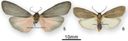
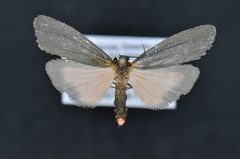
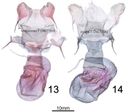
Hypoprepia inculta is a in the Erebidae, first described by Henry Edwards in 1882. It is to the Rocky Mountain region of the United States, occurring from the Mexico border northward to southern Wyoming and the Black Hills of South Dakota. The species is associated with bunchgrass steppe . It belongs to the Arctiinae, tribe Lithosiini, a group commonly known as lichen moths.
Pronunciation
How to pronounce Hypoprepia inculta: /haɪ.poʊˈpriː.pi.ə ɪnˈkʌl.tə/
These audio files are automatically generated. While they are not always 100% accurate, they are a good starting point.
Images
Habitat
Bunchgrass steppe. This grassland is characterized by dense tufts of grasses with intervening bare ground, occurring in semi-arid conditions at moderate elevations in the Rocky Mountain region.
Distribution
United States: Rocky Mountain states from the Mexico border north to southern Wyoming and the Black Hills of South Dakota.
More Details
Taxonomic placement
The Hypoprepia was historically placed in , which has been reclassified as Arctiinae within family Erebidae. Some sources may still reference the older classification.