
Bruceia hubbardi
Dyar, 1898
Pronunciation
How to pronounce Bruceia hubbardi: //ˈbruːsi.ə hʌˈbɑːrdi//
These audio files are automatically generated. While they are not always 100% accurate, they are a good starting point.
Identification
No diagnostic features distinguishing this from or similar are documented in available sources.
Images
Appearance
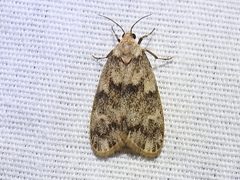
Wingspan 22–25 mm. Specific coloration and pattern details are not documented in available sources.
Habitat
Arid and semi-arid environments of the southwestern United States. Specific microhabitat preferences are not documented.
Distribution
Western North America: California, Nevada, Colorado, and western Texas. Records suggest presence across the Mojave Desert, Great Basin, and southern Rocky Mountain foothills.
Seasonality
active June through September, with peak activity likely in mid-summer.
Behavior
are and have been observed at light sources. Further behavioral details are not documented.
More Details
Taxonomic note
Placed in Arctiinae (formerly ), tribe Lithosiini, reflecting modern classification of tiger moth relatives within Erebidae.