
Gazoryctra lembertii
(Dyar, 1894)
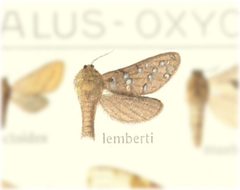
Gazoryctra lembertii is a hepialid described by Harrison Gray Dyar in 1894. The is known from California and the western United States. have a wingspan of approximately 32 mm. Like other members of Hepialidae, the larvae are believed to feed on plant roots, though specific associations for this species remain undocumented.
Pronunciation
How to pronounce Gazoryctra lembertii: //ɡæzɔˈɹɪk.tɹə lɛmˈbɛɹ.ti.aɪ//
These audio files are automatically generated. While they are not always 100% accurate, they are a good starting point.
Identification
Distinguished from other Gazoryctra by geographic distribution and subtle morphological features, though precise diagnostic characters require examination. The relatively small wingspan (32 mm) may help separate it from larger .
Images
Appearance
have a wingspan of approximately 32 mm. Specific coloration and pattern details are not well documented in available sources.
Habitat
Specific preferences are not documented. Other Gazoryctra are associated with montane and forested environments, but direct evidence for G. lembertii is lacking.
Distribution
United States, specifically California. Distribution records beyond California are not confirmed.
Similar Taxa
- Other Gazoryctra species share general hepialid ; G. lembertii distinguished by combination of size, distribution, and subtle structural features.
More Details
Taxonomic history
Originally described by Dyar in 1894. The specific epithet 'lembertii' honors an individual, likely a collector or naturalist associated with early California entomology.