
Calledapteryx dryopterata
Grote, 1868
Brown Scoopwing, brown scoopwing moth
Calledapteryx dryopterata, the Brown Scoopwing, is a in the Uraniidae and the sole member of its . It is found in the eastern United States. The species was first described by Augustus Radcliffe Grote in 1868. It belongs to a small family of moths that includes both day-flying and night-flying species, some with distinctive wing shapes.
Pronunciation
How to pronounce Calledapteryx dryopterata: /kælɛdæptəˌrɪks draɪˌɒptəˈreɪtə/
These audio files are automatically generated. While they are not always 100% accurate, they are a good starting point.
Identification
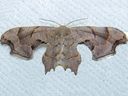
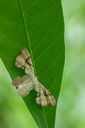
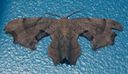
The Brown Scoopwing can be distinguished from other Uraniidae in its range by its relatively plain brown coloration and the characteristic scoop-like indentation on the hindwing margin that gives the group its . The wings are broad and somewhat triangular, with the forewings slightly larger than the hindwings. The body is slender and matches the wing coloration. It lacks the metallic iridescence or bold patterns seen in some related uraniid .
Images
Habitat
Eastern deciduous forests and wooded areas. Associated with oak-dominated , as the larvae feed on oaks.
Distribution
Eastern United States, from New England southward. Records include Vermont and surrounding regions.
Seasonality
are active from late spring through summer, with peak activity typically in June and July.
Diet
Larvae feed on oak (Quercus). feeding habits are not well documented.
Host Associations
- Quercus - larval plantprimary ; specific oak not definitively established
Similar Taxa
- Uraniidae species with metallic colorationdistinguished by plain brown coloration without metallic iridescence
- Other scoopwing moths in family Uraniidaeseparated by geographic range and less patterned wings; many tropical uraniids have more elaborate wing shapes or tails