
Euphyia intermediata
(Guenée, 1858)
Sharp-angled Carpet, American Sharp-angled Carpet
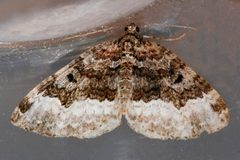
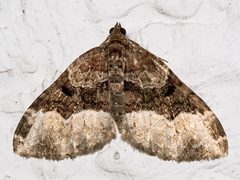
Euphyia intermediata is a small geometrid commonly known as the sharp-angled carpet or American sharp-angled carpet. The was first described by Guenée in 1858 and was long confused with the European Euphyia unangulata until recognized as distinct in 1999. It has a broad transcontinental distribution across northern North America and is active from spring through late summer.
Pronunciation
How to pronounce Euphyia intermediata: /juːˈfaɪ.jə ˌɪn.təˌmiː.diˈeɪ.tə/
These audio files are automatically generated. While they are not always 100% accurate, they are a good starting point.
Identification
The combination of small size (21–27 mm wingspan), sharp-angled forewing pattern, and geographic range helps distinguish this . Previously confused with the European Euphyia unangulata, from which it was separated based on morphological and geographic evidence. The angular wing pattern is more pronounced than in many related carpet moths.
Images
Habitat
Occurs in varied across its broad range, including deciduous and mixed woodlands, forest edges, meadows, and disturbed areas where larval plants grow.
Distribution
Transcontinental in northern North America: coast-to-coast across southern Canada and northern United States, extending south to North Carolina in the east and California, Utah, and possibly Arizona in the west. Northern limit reaches Northwest Territories and Alaska.
Seasonality
active from April to September. One per year.
Diet
Larvae feed on bedstraw (Galium), carnation (Dianthus), chickweed (Stellaria), elm (Ulmus), and mustard (Brassicaceae). Specific feeding habits not documented.
Host Associations
- Galium - larval food plantbedstraw
- Dianthus - larval food plantcarnation
- Stellaria - larval food plantchickweed
- Ulmus - larval food plantelm
- Brassicaceae - larval food plantmustard
Life Cycle
One per year. Complete with , larval, pupal, and stages. Adults emerge in spring and remain active through late summer.
Ecological Role
Larval herbivore; contributes to nutrient cycling and serves as prey for . larval feeding on diverse plant suggests ecological flexibility.
Human Relevance
Minor significance. Occasionally encountered by observers and photographers. Not known as an agricultural pest despite larval feeding on some cultivated plants.
Similar Taxa
- Euphyia unangulataEuropean previously considered ; separated by Scoble et al. (1999) based on geographic and morphological differences. North American now assigned to E. intermediata.
Misconceptions
Long treated as the same as the European Euphyia unangulata due to assumed Holarctic distribution; this was corrected in 1999.
More Details
Taxonomic history
The North American was previously identified as Euphyia unangulata, a name applied under the assumption of a Holarctic . Malcolm J. Scoble and colleagues formally recognized E. intermediata as a distinct species in Geometrid Moths of the World (1999).