
Trichopterygini
Genus Guides
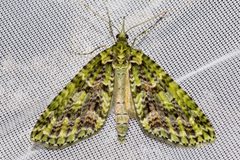
1Trichopterygini is a tribe of geometer moths in the Larentiinae. Australian members include three (Episteira, Tympanota, and Sauris) with 14 recognized , eight of which were described as new in a 1980 revision. The tribe occurs in the Oriental Region, Pacific islands, and Australia, with a predominantly eastern and northern distribution on the Australian mainland. No species are known from Tasmania.
Pronunciation
How to pronounce Trichopterygini: /ˌtrɪkɒptəˈrɪdʒɪnaɪ/
These audio files are automatically generated. While they are not always 100% accurate, they are a good starting point.
Images
Habitat
Predominantly rain-forest in Australia. Larvae of known are arboreal.
Distribution
Oriental Region, Pacific islands, and Australia. In Australia: predominantly eastern and northern mainland distribution; no known from Tasmania. Sauris extends to Niue Island; Episteira extends to the Tongan group.
Host Associations
- Podocarpus - larval plant for Tympanota podocarpi
Similar Taxa
- TatosomaNo close relationships with New Zealand Tatosoma Butler; this lack of affinity supports a northern, post-Cretaceous origin for Trichopterygini rather than Gondwanan connections.
- Neotropical geometrid generaNo close relationships with neotropical ; absence of such connections indicates the tribe's northern origin and biogeographic history distinct from South American lineages.
More Details
Taxonomic revision
A 1980 revision recognized three in Australia: Episteira Warren (including E. nigrifrons protima, comb. et stat. nov.), Tympanota Warren (regarded as distinct genus with T. p. perophora, comb. nov., and T.p. podocarpi, subsp. nov.), and Sauris Guenée (with three -groups: lichenias, commoni, and hirundinata groups). The revision described eight new total.
Biogeographic origin
The lack of close relationships with New Zealand Tatosoma or neotropical , combined with predominantly rain-forest , indicates a northern, post-Cretaceous origin for the tribe.