
Hammaptera
Herrich-Schäffer, 1855
Species Guides
1- Hammaptera parinotata(Hammaptera Moth)
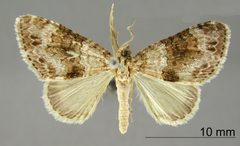
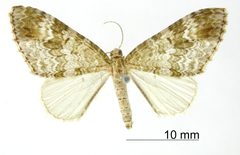
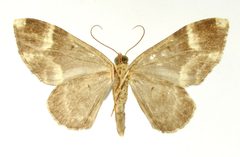
Hammaptera is a of in the Geometridae, Larentiinae, erected by Gottlieb August Wilhelm Herrich-Schäffer in 1855. The genus contains approximately 27 described distributed primarily in the Neotropical region. The type species is Hammaptera probataria. Many species were described by early 20th-century lepidopterists including Schaus, Dognin, and Warren.
Pronunciation
How to pronounce Hammaptera: /hæmˈmæptəra/
These audio files are automatically generated. While they are not always 100% accurate, they are a good starting point.
Identification
Members of Hammaptera can be distinguished from other Larentiinae by wing pattern characteristics, though specific diagnostic features require examination of . The genus name refers to the hooked or curved wing apex (from Greek 'hamma' meaning hook and 'ptera' meaning wing). -level identification relies on genitalia dissection and comparison with type material due to subtle external morphological differences.
Images
Distribution
Neotropical region, with records from Central America, South America, and the Caribbean. Specific countries with documented include Rica, Panama, Colombia, Ecuador, Peru, Brazil, and various Caribbean islands.
Similar Taxa
- EupitheciaBoth are in Larentiinae with similar wing shapes, but Eupithecia is with different genitalia structure and typically smaller size
- ChloroclystisShares Larentiinae and general habitus, but differs in wing venation and male genitalia
More Details
Historical taxonomy
The has undergone limited modern taxonomic revision. Many were described between 1893-1916 during intensive exploration of Neotropical Lepidoptera. The subspecific names within H. parinotata (densata, tenera) suggest possible requiring further study.
Etymology
The name derives from Greek 'hamma' (ἅμμα, meaning hook or fastening) and 'ptera' (πτερά, meaning wings), likely referring to the falcate or hooked apex of the forewing characteristic of many .