
Dysstroma truncata
(Hufnagel, 1767)
Marbled Carpet Moth, Common Marbled Carpet
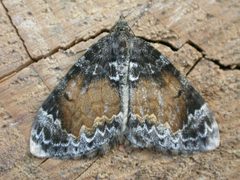
Dysstroma truncata is a widely distributed in the Geometridae, commonly known as the marbled carpet moth or common marbled carpet. It is very common throughout the Palearctic region and the Near East. The has been recorded in North America as well. It is sometimes placed in the Chloroclysta due to taxonomic uncertainty, though Dysstroma is the currently accepted genus. With over 8,600 observations on iNaturalist, it is among the more frequently documented geometrid moths.

Pronunciation
How to pronounce Dysstroma truncata: /dɪsˈstroʊmə trʌŋˈkɑːtə/
These audio files are automatically generated. While they are not always 100% accurate, they are a good starting point.
Identification
Dysstroma truncata may be distinguished from by its marbled wing pattern, though specific diagnostic characters are not well documented in available sources. The has historically been confused with members of the Chloroclysta, and some authorities continue to place it there. Accurate identification to species level within Dysstroma typically requires examination of genitalia or detailed wing pattern analysis.
Images
Distribution
Palearctic region including Europe (Belgium, with records from Brussels-Capital Region, Flemish Region, and Walloon Region), the Near East, and North America. The has a broad transcontinental range.
Similar Taxa
- Chloroclysta speciesDysstroma truncata is sometimes placed in the Chloroclysta due to morphological similarities, and the two genera have been historically confused
- Other Dysstroma species share similar marbled carpet appearance and require careful examination for accurate separation
More Details
Taxonomic Uncertainty
The has been moved between Dysstroma and Chloroclysta, reflecting ongoing taxonomic debate about generic boundaries within the Larentiinae
Observation Frequency
With 8,653 iNaturalist observations, this is among the most frequently documented in its , suggesting it is both common and conspicuous
Sources and further reading
- BugGuide
- GBIF taxonomy match
- iNaturalist taxon
- NCBI Taxonomy
- Catalogue of Life
- A Crafty Time at the Bohart Museum of Entomology | Bug Squad
- Catasticta truncata - Entomology Today
- Urban Wonder: Rare Butterfly Thrives in One of Ecuador's Largest Cities
- Pablo Sebastian Padron, Ph.D. - Entomology Today
- Acmaeodera carlota in northern Arizona | Beetles In The Bush