
Dysstroma hersiliata
(Guenée, [1858])
Orange-barred Carpet Moth
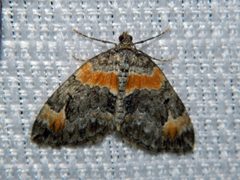
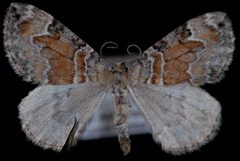
Dysstroma hersiliata, commonly known as the orange-barred carpet , is a small geometrid moth with a wingspan of 25–29 mm. are distinguished by a prominent solid orange bar across the upper-middle portion of otherwise gray wings with black and white patterning. The is broadly distributed across northern North America, with higher abundance in eastern regions. Larvae are lime green with two off-white stripes near the end.
Pronunciation
How to pronounce Dysstroma hersiliata: /dɪsˈstroʊmə hɜrˈsɪliːˌeɪtə/
These audio files are automatically generated. While they are not always 100% accurate, they are a good starting point.
Identification
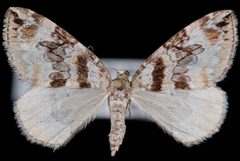
The solid orange bar across the upper-middle wing is diagnostic and distinguishes this from other Dysstroma and carpet moths. The pale discal spot on the hindwing and very short palpi are additional supporting characters. Variation in black and white patterning between individuals can complicate identification if the orange bar is obscured or worn.
Images
Distribution
Southern Canada and northern United States from the Pacific to the Atlantic; more commonly encountered in the eastern half of this range. Specific provincial and state records include Alberta, Manitoba, and Saskatchewan in Canada, and Vermont in the United States.
Similar Taxa
- Other Dysstroma speciesLack the distinctive solid orange bar across the wing; patterning generally more muted or different in arrangement
- Other carpet moths (Larentiinae)Typically lack the prominent single orange bar; may have more diffuse or multiple colored bands
More Details
Subspecies
Two are recognized: Dysstroma hersiliata cervinifascia (Walker, 1862) and Dysstroma hersiliata hersiliata (Guenée in Boisduval & Guenée, 1858)