
Destutia
Grossbeck, 1908
Species Guides
3Destutia is a of in the Geometridae, established by Grossbeck in 1908. The genus contains four described distributed in North America. Destutia belongs to the Ennominae, a diverse group of geometrid moths often referred to as "inchworm moths" due to the characteristic looping locomotion of their larvae.
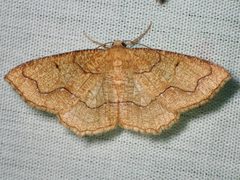
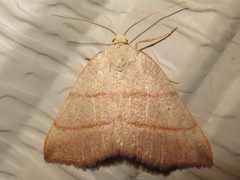
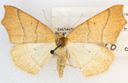
Pronunciation
How to pronounce Destutia: /dɛsˈtuːti.a/
These audio files are automatically generated. While they are not always 100% accurate, they are a good starting point.
Identification
Destutia can be distinguished from other Ennominae by wing pattern and genitalic characters. The genus is placed in the tribe Boarmiini or related ennomine groups, though precise tribal assignment varies among classifications. Species-level identification requires examination of male genitalia and wing pattern details, particularly the configuration of forewing lines and shading.
Images
Distribution
North America. The four described have been recorded from various regions of the United States, with Destutia excelsa and Destutia oblentaria known from the eastern and central states, and Destutia flumenata and Destutia novata from western regions.
Similar Taxa
- BoarmiaBoth belong to Ennominae and share similar wing patterns with wavy transverse lines; Destutia is distinguished by specific genitalic and forewing pattern elements.
- HypagyrtisAnother ennomine with similar cryptic brown or gray coloration; Destutia typically show more pronounced forewing markings and different antennal structure in males.
More Details
Taxonomic history
The was established by Grossbeck in 1908 with Destutia novata as the type . The genus has historically been classified in various positions within Ennominae, reflecting ongoing revisions of geometrid higher-level .