
Vinemina
McDunnough, 1920
Species Guides
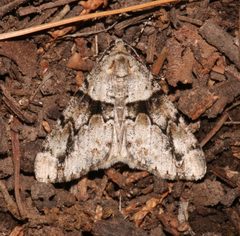
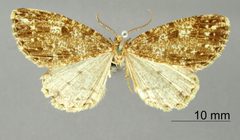
3Vinemina is a of in the Geometridae, Ennominae, erected by James Halliday McDunnough in 1920. The genus contains three described : V. perdita, V. opacaria, and V. catalina. These are geometrid moths, commonly known as inchworms or loopers, though specific ecological details for the genus remain limited in the literature.
Pronunciation
How to pronounce Vinemina: //waɪˈnɛmɪnə//
These audio files are automatically generated. While they are not always 100% accurate, they are a good starting point.
Identification
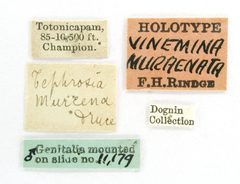
Vinemina can be distinguished from other ennomine geometrids by genitalic characters and wing pattern features, though specific diagnostic traits require expert examination. V. opacaria (originally described in the Eufidonia by Hulst, 1881) and V. catalina were both described by or transferred by McDunnough, suggesting morphological similarities that prompted their inclusion in this genus. Accurate identification to species level typically requires dissection and comparison with .
Images
Distribution
The occurs in North America. Vinemina opacaria is known from the eastern United States, while V. catalina was described from Santa Catalina Island, California, suggesting a western distribution for that . V. perdita was described from material in the northeastern United States or adjacent Canada.
Similar Taxa
- EufidoniaVinemina opacaria was originally described in Eufidonia (as Eufidonia opacaria), indicating historical taxonomic confusion and morphological similarity between these ennomine .
- Other Ennominae generaVinemina shares the broad-winged, relatively stout-bodied form typical of many Ennominae, requiring careful examination of male genitalia and wing venation for definitive separation.
More Details
Taxonomic History
McDunnough erected Vinemina in 1920, later adding V. catalina in 1945. The inclusion of V. opacaria (transferred from Eufidonia) and V. perdita (described by Guedet, 1939) expanded the . The etymology of the name is not documented in available sources.
Research Status
Despite 236 iNaturalist observations, published biological studies on Vinemina remain scarce. Most information derives from taxonomic descriptions and specimen records rather than ecological research.