
Eufidonia notataria
(Walker, 1860)
Powder Moth
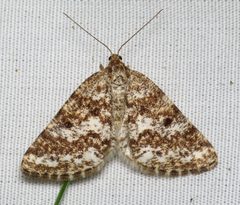
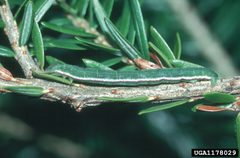
Eufidonia notataria, commonly known as the powder , is a North American geometrid moth with a wingspan of 22–27 mm. are active from May to July with a single . The larvae feed on coniferous trees including balsam fir, eastern hemlock, eastern larch, and spruces.

Pronunciation
How to pronounce Eufidonia notataria: /juːfɪˈdoʊniə noʊtəˈtɛəriə/
These audio files are automatically generated. While they are not always 100% accurate, they are a good starting point.
Identification
Distinguishable from other Eufidonia by geographic range and ; active May–July with single per year. Specific wing pattern differences from congenerics not detailed in available sources.
Images
Habitat
Forested environments supporting conifer : balsam fir, eastern hemlock, eastern larch, and spruces.
Distribution
North-eastern North America. Documented in Canada (Manitoba, Saskatchewan) and United States (Vermont).
Seasonality
on wing May to July. One per year.
Diet
Larvae feed on balsam fir (Abies balsamea), eastern hemlock (Tsuga canadensis), eastern larch (Larix laricina), and spruces (Picea spp.). diet not specified.
Host Associations
- Abies balsamea - larval food plantbalsam fir
- Tsuga canadensis - larval food planteastern hemlock
- Larix laricina - larval food planteastern larch
- Picea - larval food plantspruces
Life Cycle
One per year. period May–July. Larval and pupal stages occur outside adult flight period; specific timing not detailed.
Ecological Role
Herbivore in coniferous forest . Larval feeding on multiple conifer suggests potential role in nutrient cycling and forest dynamics.
Similar Taxa
- Eufidonia discospilataCongeneric in same geographic region; requires examination of wing pattern and genitalia for definitive separation
- Other GeometridaeSimilar size and general appearance; identification to and requires detailed morphological examination
More Details
Taxonomic note
Described by Walker in 1860. Accepted name per Catalogue of Life and GBIF.