
Mellilla
Grote, 1873
Species Guides
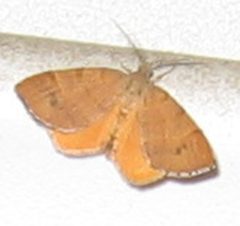
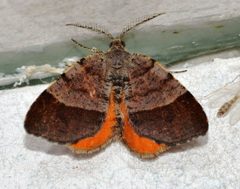
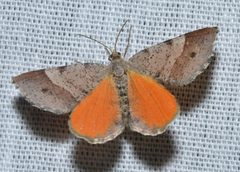
1- Mellilla xanthometata(Orange Wing)
Mellilla is a in the Geometridae, established by Augustus Radcliffe Grote in 1873. Its sole , Mellilla xanthometata (orangewing moth), was described by Francis Walker in 1862. The genus is found across most of eastern North America. are active during both day and night, with two per year.
Pronunciation
How to pronounce Mellilla: //mɛˈlɪlə//
These audio files are automatically generated. While they are not always 100% accurate, they are a good starting point.
Identification
The contains only one , Mellilla xanthometata, which can be recognized by its small size (16–21 mm wingspan) and orange wing coloration. Within Geometridae, it may be distinguished from other small orange-winged by geographic range (eastern North America) and period (early spring and late June).
Images
Appearance
Wingspan approximately 16–21 mm. exhibit orange coloration on the wings, as indicated by the "orangewing moth" for the sole .
Habitat
Associated with supporting its larval plant, Gleditsia triacanthos (honey locust). Specific habitat details for the beyond host plant association are not documented.
Distribution
Most of eastern North America.
Seasonality
active in early spring and again in late June; two per year. Adults fly during both day and night.
Diet
Larvae feed on Gleditsia triacanthos (honey locust). feeding habits are not documented.
Host Associations
- Gleditsia triacanthos - larval food planthoney locust
Life Cycle
Two per year. emerge in early spring and late June. Larval stage feeds on plant foliage.
Behavior
are active during both day and night, which is atypical for many .
Ecological Role
Larval herbivore on Gleditsia triacanthos. Specific ecological roles beyond herbivory are not documented.
Human Relevance
Not documented as economically significant. Occasionally encountered by citizen scientists during -watching events such as National Moth Week.
Similar Taxa
- Other small Geometridae generaSimilar size and general ; distinguished by orange wing coloration and specific association with Gleditsia triacanthos as larval
More Details
Taxonomic history
erected by Augustus Radcliffe Grote in 1873. The sole was originally described by Francis Walker in 1862, prior to the establishment of the genus.
Monotypy
Mellilla is , containing only Mellilla xanthometata. This unusual taxonomic structure means -level and -level traits are effectively synonymous for this .