
Macaria sexmaculata
Packard, 1867
Six-spotted Angle, Green Larch Looper, Larch Looper
Macaria sexmaculata is a small geometrid with a wingspan of 16–24 mm, distributed across and montane regions of North America from Alaska to Oregon and Massachusetts. are active during summer months, with one to two per year. The exhibits specialization on larch (Larix), with two recognized showing geographic and host-plant differentiation: ssp. sexmaculata in eastern and central regions, and ssp. incolorata in western North America.
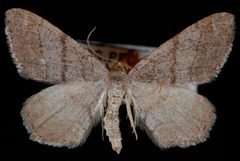
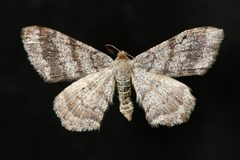
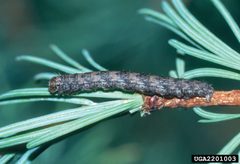
Pronunciation
How to pronounce Macaria sexmaculata: //məˈkɛə.ɹi.ə sɛks.mæk.jʊˈleɪ.tə//
These audio files are automatically generated. While they are not always 100% accurate, they are a good starting point.
Identification
The can be distinguished from similar Macaria species by its association with larch and its specific geographic distribution. The two differ in range: ssp. sexmaculata occurs in Newfoundland, Labrador, Alberta, and eastern North America south to Maryland; ssp. incolorata occurs from Alberta through British Columbia to Oregon and Washington. Subspecies incolorata has been recorded on western larch (Larix occidentalis) and Douglas-fir (Pseudotsuga), whereas ssp. sexmaculata is restricted to Larix laricina and Larix decidua.
Images
Appearance
Small with wingspan 16–24 mm. coloration and pattern details not explicitly described in sources, but the 'six-spotted angle' suggests six spots on the wings.
Habitat
Associated with larch-dominated forests and woodlands. Larval consists of larch trees, with -specific associations: eastern on tamarack (Larix laricina) and European larch (Larix decidua), western populations (incolorata) on western larch (Larix occidentalis) and occasionally Douglas-fir (Pseudotsuga).
Distribution
North America: Alaska to Nunavut and Newfoundland; south to Massachusetts in the east and Oregon in the west. sexmaculata: Newfoundland, Labrador, Alberta, Massachusetts, Connecticut, New York, Maryland, Michigan, North Dakota. Subspecies incolorata: Alberta to British Columbia, northern Idaho, western Montana, Washington, Oregon.
Seasonality
on wing from June to August. One to two per year.
Diet
Larvae feed on Larix . sexmaculata: Larix laricina and Larix decidua. Subspecies incolorata: Larix occidentalis and Pseudotsuga.
Host Associations
- Larix laricina - larval food plant sexmaculata
- Larix decidua - larval food plant sexmaculata
- Larix occidentalis - larval food plant incolorata
- Pseudotsuga - larval food plant incolorata
Life Cycle
One to two per year. and details not explicitly documented.
Ecological Role
Herbivore specializing on larch; contributes to nutrient cycling in larch-dominated forest through larval feeding.
Human Relevance
Minor potential economic significance in larch plantations or managed forests due to larval herbivory, though not documented as a major pest.
Similar Taxa
- Other Macaria speciesMany Macaria share similar wing patterns and body form; identification requires plant association and geographic range.
- Other larch-feeding geometridsLarch specialization helps distinguish from geometrids, but other larch may co-occur and require careful examination.
More Details
Subspecies differentiation
Two recognized based on geographic range and plant associations. Subspecies incolorata shows broader host range including Pseudotsuga, possibly reflecting to western North American forest .