
Macaria fissinotata
(Walker, [1863])
Hemlock Angle
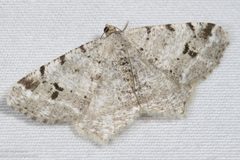
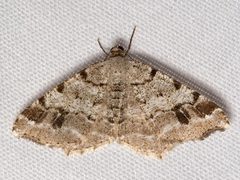
Macaria fissinotata, commonly known as the hemlock angle, is a small geometrid native to eastern North America. are active from late spring through summer, with periods varying by latitude. The is strongly associated with coniferous forests, where its larvae feed on hemlock, spruce, and fir trees. The specific epithet refers to the often-split forewing spot that serves as a key identification feature.
Pronunciation
How to pronounce Macaria fissinotata: //məˈkɛəriə ˌfɪsɪnoʊˈtɑːtə//
These audio files are automatically generated. While they are not always 100% accurate, they are a good starting point.
Identification
The forewing's large spot, often divided into two separate markings, distinguishes this from similar Macaria. The small size (22–25 mm wingspan) and association with Tsuga, Picea, or Abies plants support identification. Separation from other Macaria species requires examination of genitalia or careful comparison of wing pattern elements.
Images
Habitat
Coniferous forests dominated by hemlock, spruce, or fir. Occurs in mature and semi-mature stands where trees are present.
Distribution
Eastern North America: Nova Scotia south to Georgia, west to Kentucky, north to Ontario. Core range spans the Appalachian and Atlantic regions.
Seasonality
fly May to September in the southern part of the range; May to July in Quebec. or depending on latitude, with longer periods at lower latitudes.
Diet
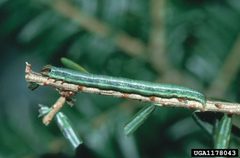
Larvae feed on Tsuga (hemlock), Picea (spruce), and Abies balsamea (balsam fir). feeding habits not documented.
Host Associations
- Tsuga - larval food plantprimary
- Picea - larval food plantsecondary
- Abies balsamea - larval food plantsecondary
Life Cycle
Complete with , larva, pupa, and stages. Larval development occurs on conifer foliage. Specific timing of stages not documented.
Ecological Role
Larval herbivore on native conifers; contributes to nutrient cycling in eastern North American coniferous forest . impacts on trees appear minimal under normal conditions.
Human Relevance
No significant economic or cultural importance. Occasionally encountered by foresters and naturalists in coniferous . Not considered a forestry pest.
Similar Taxa
- Other Macaria speciesShare similar wing shape and pattern; require careful examination of forewing spot configuration and genitalia for definitive separation
- Other Ennominae geometridsSimilar resting posture and wing angling; plant association and spot pattern help distinguish M. fissinotata
More Details
Etymology
The specific epithet combines Latin 'fissus' (cleaved or split) and 'notatus' (mark), referring directly to the divided forewing spot.