
Eumacaria
Packard, 1873
brown-bordered geometer moth
Species Guides
1- Eumacaria madopata(Brown-bordered Geometer Moth)
Eumacaria is a in the Geometridae, containing only the Eumacaria madopata, commonly known as the brown-bordered geometer moth. The genus was established by Packard in 1873. Its sole species is found across much of North America, from British Columbia and Washington east to Maine and south to Florida and New Mexico. The species is listed as threatened in Connecticut.
Pronunciation
How to pronounce Eumacaria: /juːməˈkɛəriə/
These audio files are automatically generated. While they are not always 100% accurate, they are a good starting point.
Identification
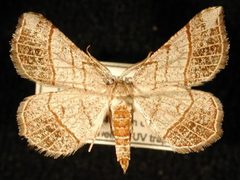
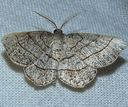
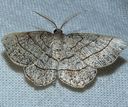
As a , Eumacaria can be distinguished from related genera by the unique combination of characters defining its sole , Eumacaria madopata. have a wingspan of 20–25 mm. The 'brown-bordered geometer moth' refers to the wing pattern of the single species.
Images
Habitat
Orchards and shrublands.
Distribution
North America: British Columbia, northern Washington, southern Saskatchewan, Maine to Florida, South Dakota, North Dakota, Nebraska, Wyoming, Idaho, Colorado, and New Mexico. Also recorded from Vermont and Connecticut (where listed as threatened).
Seasonality
are active from early June to early July in northern parts of the range, and from April to September in southern parts. One per year.
Diet
Larvae feed on Prunus (including Prunus pensylvanica and Prunus serotina) and Pyrus.
Host Associations
- Prunus pensylvanica - larval food plant
- Prunus serotina - larval food plant
- Pyrus - larval food plant
Life Cycle
One per year.
Human Relevance
Listed as threatened in Connecticut. Larvae feed on fruit trees (Prunus, Pyrus), which may have minor relevance to orchard management.
Similar Taxa
- Other Geometridae generaEumacaria is distinguished by being with the single Eumacaria madopata; other in the contain multiple species or have different wing patterns and morphological characters.
More Details
Monotypic status
The contains only one , Eumacaria madopata, described by Guenée in 1857.