
Homochlodes fritillaria
(Guenée, 1857)
Pale Homochlodes Moth, Pale Homochlodes, Fritillary Moth
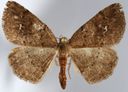
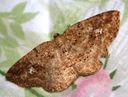
Homochlodes fritillaria, commonly known as the Pale Homochlodes , is a of geometrid moth in the Geometridae. It is found across North America, with documented records from Canada (Manitoba, Saskatchewan) and the United States (Vermont). The species is assigned MONA/Hodges number 6812. As a member of the Ennominae, it belongs to a diverse group of moths often referred to as inchworms or loopers due to their characteristic larval locomotion.
Pronunciation
How to pronounce Homochlodes fritillaria: /hoʊˈmoʊkloʊdiːz ˌfrɪtɪˈlɛəriə/
These audio files are automatically generated. While they are not always 100% accurate, they are a good starting point.
Identification
The can be distinguished by its MONA/Hodges number 6812, a standardized identification system for North American Lepidoptera. Specific wing pattern and coloration details for reliable field identification are not documented in available sources.
Images
Distribution
North America, with confirmed records from Manitoba and Saskatchewan in Canada, and Vermont in the United States.
Human Relevance
The has limited direct human relevance. It is catalogued in the MONA ( of North America) system with Hodges number 6812, facilitating identification and biodiversity documentation efforts. The specific epithet 'fritillaria' references the fritillary pattern, though this association appears nominal rather than indicating a direct ecological relationship with Fritillaria plants.
Similar Taxa
- Other Homochlodes speciesCongeneric would share similar wing patterns and body proportions, requiring examination of genitalia or detailed wing markings for definitive identification.
- Other Ennominae mothsMembers of this share the geometrid body plan and looping larval locomotion, necessitating careful comparison of wing patterns and, in many cases, dissection for -level confirmation.
More Details
Taxonomic History
Originally described as Numeria fritillaria by Guenée in 1857, later transferred to the Homochlodes. The authorship date is sometimes cited as 1858 in secondary sources.
Observation Frequency
The has 4,428 observations recorded on iNaturalist as of the source date, indicating it is moderately well-documented by citizen scientists, though this does not necessarily reflect actual abundance.