
Drepanulatrix carnearia
(Hulst, 1888)
A North American geometrid in the Ennominae, described by George D. Hulst in 1888. The is assigned MONA/Hodges number 6688. It belongs to a of small to medium-sized moths whose larvae feed on various woody plants.
Pronunciation
How to pronounce Drepanulatrix carnearia: //ˌdrɛpəˈnjuːləˌtrɪks ˌkɑːrnɪˈɛəriə//
These audio files are automatically generated. While they are not always 100% accurate, they are a good starting point.
Identification
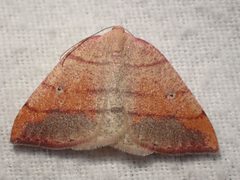
The Drepanulatrix can be distinguished from related geometrid genera by wing pattern and genitalia characteristics, though specific diagnostic features for D. carnearia require examination of or specialized literature. are small to medium-sized geometrid moths with the typical slender body and broad wings characteristic of the . The specific epithet 'carnearia' (Latin for 'of flesh' or 'flesh-colored') may refer to adult coloration, though this has not been formally documented in available sources.
Images
Distribution
Documented from North America. Specific state or provincial records are not available in the provided sources, though the occurs in western and central regions of the continent.
Similar Taxa
- Other Drepanulatrix speciesCongeneric share similar size, wing shape, and general appearance. D. carnearia requires dissection or examination of genitalia for definitive separation from D. unicalcararia, D. falcataria, and other members of the .
- General Ennominae geometridsMany small geometrid moths in the Ennominae share the slender build and resting posture of Drepanulatrix, necessitating careful examination of wing pattern details and male genitalia for accurate identification.
More Details
Taxonomic authority
First described by George D. Hulst in 1888, a prominent American entomologist who described numerous North American Lepidoptera in the late 19th century.
Nomenclature
The specific epithet 'carnearia' derives from Latin 'carneus' meaning 'of flesh' or 'flesh-colored,' likely referring to some aspect of the 's coloration.