
Glaucina
Hulst, 1896
Species Guides
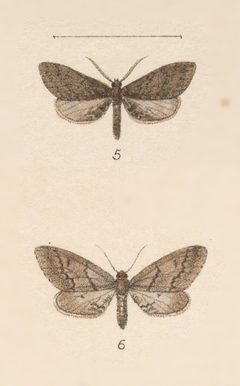
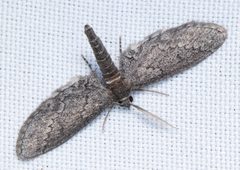
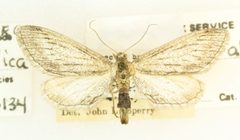
23Glaucina is a of in the Geometridae, Ennominae, erected by George Duryea Hulst in 1896. The genus comprises approximately 35 described , most of which were revised and described by Frederick H. Rindge in 1959. Species are distributed primarily in western North America. As geometrid moths, likely have the characteristic slender bodies and broad wings typical of the family, though specific morphological traits distinguishing Glaucina from related genera require examination of genitalic structures and wing patterns.
Pronunciation
How to pronounce Glaucina: //ˈɡlaʊ.sɪ.nə//
These audio files are automatically generated. While they are not always 100% accurate, they are a good starting point.
Identification
Glaucina are distinguished from related Synglochis and Eubarnesia primarily through examination of male and female genitalia structures, as detailed in Rindge's 1959 revision. Wing pattern and venation characters also contribute to species-level identification. The genus belongs to the Ennominae within Geometridae.
Images
Distribution
Western North America. Specific distributions vary; for example, Glaucina lowensis is known from the type locality in Wyoming, Glaucina spaldingata from Colorado, and Glaucina utahensis from Utah. Many species were described from California and surrounding western states.
Similar Taxa
- SynglochisRelated geometrid revised alongside Glaucina by Rindge (1959); distinguished by genitalic
- EubarnesiaRelated geometrid revised alongside Glaucina by Rindge (1959); distinguished by genitalic
More Details
Taxonomic revision
The most comprehensive treatment of this is Frederick H. Rindge's 1959 revision, which described numerous new and clarified relationships with Synglochis and Eubarnesia.
Sources and further reading
- BugGuide
- Wikipedia
- GBIF taxonomy match
- iNaturalist taxon
- NCBI Taxonomy
- Catalogue of Life
- A Revision of the Platyseiinae (Mesostigmata: Aceosejidae) Based on Material in the Collections of the British Museum (Natural History).G. Owen Evans , K. H. HyattThe Systematics of Tetragoneuria, Based on Ecological, Life History, and Morphological Evidence (Odonata: Corduliidae).Edward J. KormondyThe Acrometopa of the Ethiopian Region: A Revision, with Notes on the Sexual Dimorphism Shown by the Group (Orthoptera: Tettigoniidae).D. R. RaggeThe Early Literature on Mallophaga (Part IV, 1787-1818.). Theresa Clay , G. H. E. HopkinsA Revision of Glaucina, Synglochis, and Eubarnesia (Lepidoptera, Geometridae).Frederick H. Rindge