
Euchlaena marginaria
(Minot, 1869)
Ochre Euchlaena Moth
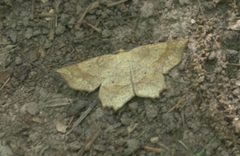
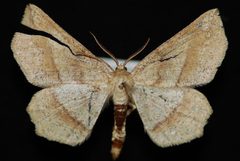
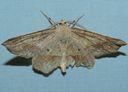
Euchlaena marginaria, commonly known as the ochre euchlaena , is a geometrid moth found in deciduous and mixedwood forests across North America. have a wingspan of approximately 40 mm and are active from May to August. The exhibits geographic variation in voltinism, with one annually in northern and two generations in southern populations. Larvae are twig mimics that feed on woody plants in several .
Pronunciation
How to pronounce Euchlaena marginaria: //juːˈkleɪnə ˌmɑːr.dʒɪˈnɛə.riə//
These audio files are automatically generated. While they are not always 100% accurate, they are a good starting point.
Identification
can be distinguished from other Euchlaena by specific wing pattern characteristics, though detailed diagnostic features are not explicitly documented in available sources. The species name refers to marginal wing markings. Larvae are recognized as twig mimics with mottled dark brown coloration.
Images
Appearance
have a wingspan of approximately 40 mm. Wing coloration and pattern details are not explicitly documented in available sources.
Habitat
Mixedwood and deciduous forests. Specific microhabitat preferences within these forest types are not documented.
Distribution
North America, from south-central British Columbia and Idaho east to Nova Scotia, and south to Florida and Missouri. Additional records from Alberta, Manitoba, and Saskatchewan in Canada.
Seasonality
active from May to August. One per year in northern parts of range; two generations per year in southern parts of range.
Diet
Larvae feed on Alnus (alders), Salix (willows), Spiraea, Amelanchier (serviceberries), Viburnum, and Betula papyrifera (paper birch). feeding habits are not documented.
Host Associations
- Alnus - larval
- Salix - larval
- Spiraea - larval
- Amelanchier - larval
- Viburnum - larval
- Betula papyrifera - larval
Life Cycle
Complete with , larva, pupa, and stages. Larvae are twig mimics with mottled dark brown coloration. Specific details of site and stage are not documented.
Behavior
Larvae are twig mimics, presumably reducing risk through . are attracted to light. Specific adult such as patterns or mating rituals are not documented.
Ecological Role
Larval herbivore on woody plants; contributes to nutrient cycling in forest . Specific ecological functions such as pollination or prey relationships are not documented.
Human Relevance
No documented economic or agricultural significance. Occasionally observed by naturalists and enthusiasts at light sources. Not known to be a pest .
Similar Taxa
- Euchlaena serrataSimilar and general appearance; requires examination of wing pattern details for separation
- Other Euchlaena species members share general geometrid and cryptic coloration patterns
More Details
Taxonomic history
Originally described as Caberodes marginaria by Charles Sedgwick Minot in 1869; later transferred to Euchlaena.
Observation frequency
Well-represented in citizen science platforms with over 1000 observations on iNaturalist, indicating it is regularly encountered within its range.