
Brymblia quadrimaculella
(Chambers, 1875)
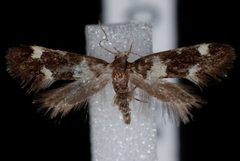
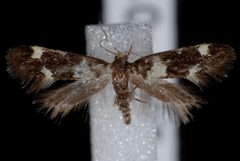
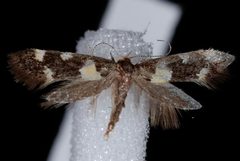
Brymblia quadrimaculella is a small in the Oecophoridae, first described by Chambers in 1875. The is known from the Canadian prairie provinces. It belongs to a of relatively obscure concealer moths with limited published biological information.
Pronunciation
How to pronounce Brymblia quadrimaculella: //ˈbrɪmbliə ˌkwɒdraɪˌmækjʊˈlɛlə//
These audio files are automatically generated. While they are not always 100% accurate, they are a good starting point.
Identification
The specific epithet "quadrimaculella" suggests four spotted markings, though formal diagnostic descriptions are not readily available in accessible literature. As a member of Oecophoridae, it likely exhibits the 's characteristic narrow wings and relatively slender body form. Definitive identification requires reference to original descriptions or specialized regional faunal treatments.
Images
Habitat
Distribution records indicate occurrence in prairie and transition zones of western Canada. Specific microhabitat associations remain undocumented.
Distribution
Recorded from Alberta, Manitoba, and Saskatchewan in Canada. No published records from the United States or other regions have been located.
More Details
Taxonomic note
The Brymblia is small and poorly studied, with most known from limited material. The Oecophoridae (concealer moths) contains numerous similar small species requiring genitalia examination or for reliable identification.
Data availability
Despite 218 iNaturalist observations, peer-reviewed biological studies of this appear absent from major entomological databases. Most accessible information derives from collection records and citizen science observations rather than systematic research.