
Lecithoceridae
Le Marchand, 1947
Long-horned Moths
Genus Guides
1, or long-horned , is a of small moths in the superfamily Gelechioidea. The family comprises over 100 and nearly 900 , with the greatest diversity concentrated in the Indomalayan realm and southern Palearctic. Recent taxonomic work has expanded the family's classification, including the establishment of the Crocanthinae in 2015. Despite being a highly diverse group of microlepidoptera, Lecithoceridae remains among the more poorly known families, with limited biological and ecological data available.
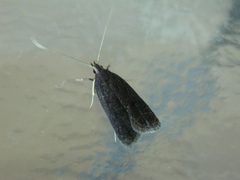
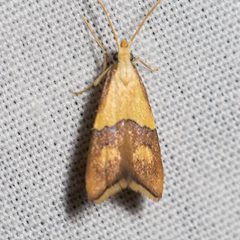
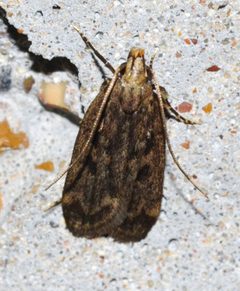
Pronunciation
How to pronounce Lecithoceridae: //lɛsɪˈθɑsərɪˌdeɪ//
These audio files are automatically generated. While they are not always 100% accurate, they are a good starting point.
Identification
Members of are distinguished from other Gelechioidea by genitalia , particularly features of the male valvae and female sterigma. The family exhibits considerable variation in wing pattern and body size across its constituent . -level identification relies on combinations of wing venation, antennal structure, and abdominal tergite characteristics.
Images
Distribution
Global distribution with strong concentration in the Indomalayan realm and southern Palearctic. In India, highest occurs in the Western Ghats (28.63% of ) and Meghalaya (25% of species), with lowest diversity in desert and Gangetic plain regions.
Similar Taxa
- GelechiidaeBoth belong to Gelechioidea and share small body size; distinguished by genitalia and antennal structure in
- OecophoridaeHistorically confused with ; separated based on wing venation patterns and male genitalia characteristics
Sources and further reading
- BugGuide
- Wikipedia
- GBIF taxonomy match
- iNaturalist taxon
- NCBI Taxonomy
- Catalogue of Life
- A catalogue of Indian Lecithoceridae (Lepidoptera: Gelechioidea)
- Global Biodiversity of the Family Lecithoceridae (Gelechioidea) with a Brief Historical Review
- Taxonomic study of the genus Nosphistica Meyrick, 1911 (Lepidoptera: Lecithoceridae) from China, with descriptions of seven new species
- Three new species and one newly recorded species of genus Frisilia Walker (Lepidoptera, Lecithoceridae) from China, with a checklist of the world
- A New Genus, Luciargentis gen. nov. Revealed by Morphological and Phylogenetic Evidence in the Family Lecithoceridae from Tibet, China.
- The complete mitogenome of Torodora canaliculata (Yu & Wang, 2022) (Lepidoptera: Lecithoceridae) and its phylogenetic implications.
- Taxonomic Revision of the Relationship Between Coproptilia and Nosphistica (Lepidoptera: Lecithoceridae) with Descriptions of Two New Species and a New Record from China.
- Two new species and one new record of the genus Torodora Meyrick (Lepidoptera, Lecithoceridae) from China.
- First report of the genus Woonpaikia Park, 2010 (Lepidoptera, Lecithoceridae) from China, with the description of two new species.
- Opacoptera Gozmány (Lepidoptera, Lecithoceridae) from China, with descriptions of four new species.