
Teleiopsis baldiana
(Barnes & Busck, 1920)
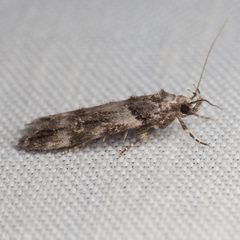
Teleiopsis baldiana is a small gelechiid described in 1920 by William Barnes and August Busck. It is restricted to California in western North America. The is associated with poison oak (Toxicodendron diversilobum), on which its larvae feed and roll leaves.
Pronunciation
How to pronounce Teleiopsis baldiana: //ˌtɛl.iˈɒp.sɪs bɔːlˈdiːə.nə//
These audio files are automatically generated. While they are not always 100% accurate, they are a good starting point.
Identification
Distinguished from similar Teleiopsis by the combination of: oblique black raised fascia from base to dorsum, the transverse fuscous shade over the end of the with narrow white exterior edging, and the black-and-brown raised scale streak at the cell end. The bluish white ground color with complex dark overlay pattern is distinctive within the for North American species.
Images
Appearance
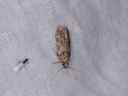
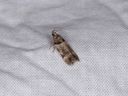
Small with wingspan 19–21 mm. Forewings bluish white, overlaid with fuscous, black and brown . Features a well-defined outwardly oblique fascia of black raised scales running from near the base of the to the basal fourth of the dorsum. An ill-defined light fuscous spot occurs on the middle of the costa. An ill-defined transverse shade of fuscous crosses over the end of the , edged exteriorly by a narrow nearly unmottled white fascia. A short transverse streak of black-and-brown raised scales appears at the end of the cell. Wing tip overlaid with fuscous.
Habitat
Associated with stands of poison oak (Toxicodendron diversilobum); likely occupies coastal and interior California where this plant grows, including chaparral, oak woodland, and riparian edges.
Distribution
to California, United States. No records from other states or countries confirmed.
Diet
Larvae feed on Toxicodendron diversilobum (poison oak, Anacardiaceae). diet not documented.
Host Associations
- Toxicodendron diversilobum - larval food plantleaves are rolled by larvae
Life Cycle
Larval stage feeds on and rolls leaves of plant. Specific details of , pupal, and longevity not documented.
Behavior
Larvae roll leaves of their plant, creating shelters while feeding.
Ecological Role
Herbivore specializing on poison oak; likely serves as prey for and other natural enemies common to gelechiid moths.
Human Relevance
Of minor indirect relevance: larvae feed on poison oak, a plant that causes contact dermatitis in humans, but the itself is not utilized for or other purposes.
Similar Taxa
- Teleiopsis diffinisSimilar size and wing pattern; T. baldiana distinguished by the specific arrangement of raised black fasciae and the white fascia edging the transverse fuscous shade at the end.
- Other North American TeleiopsisMost lack the distinctive combination of oblique basal fascia and terminal streak of raised ; precise identification requires examination of genitalia in some cases.
More Details
Type locality
Original description based on specimens from California; specific type locality not stated in original description.
Etymology
Specific epithet 'baldiana' etymology not documented in original description.